
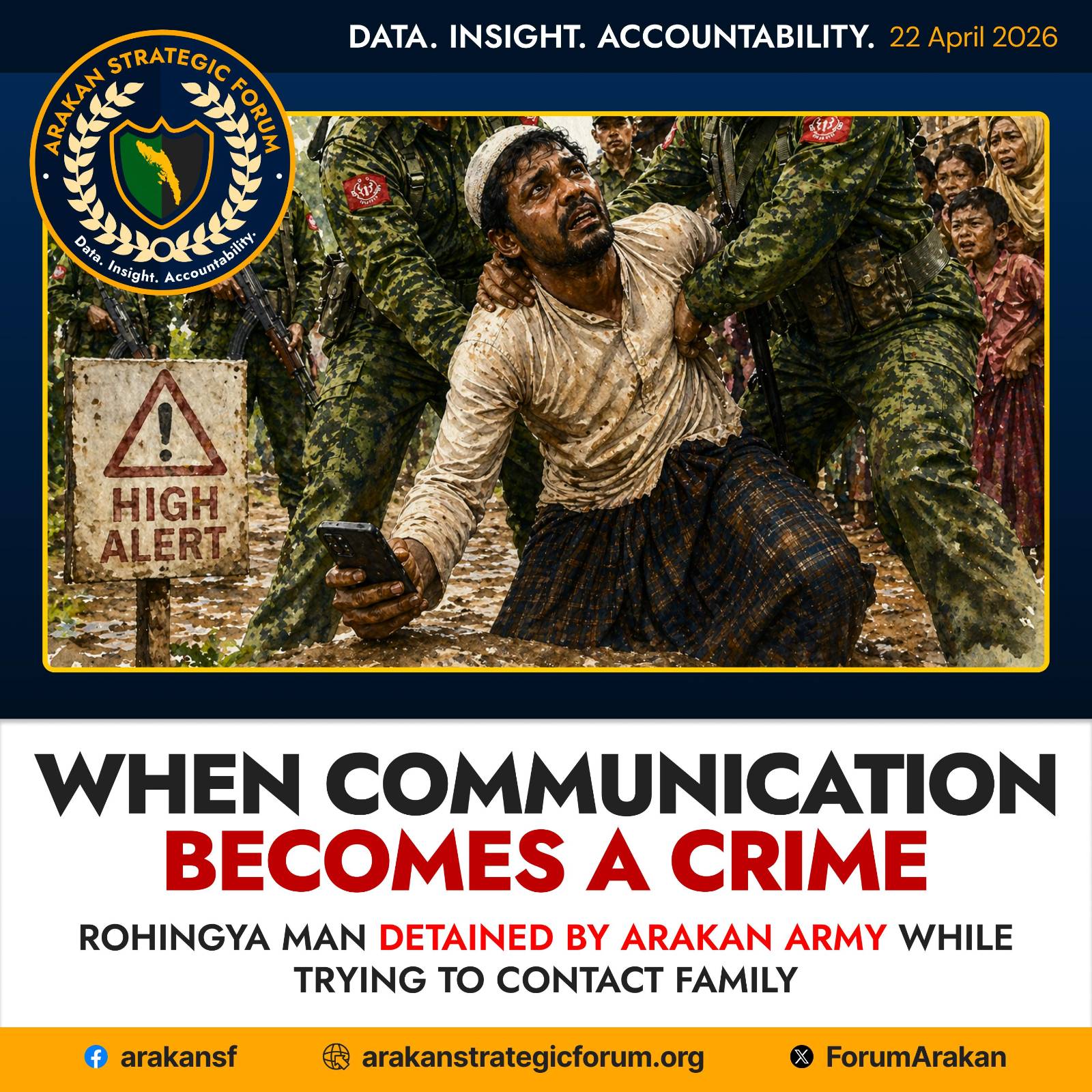
On 12 April 2026, Monir Ahmed (45), son of Soyed Kasim, from Daung Sara village, was detained by members of the Arakan Army in Daa Pyin Saya village, Buthidaung Township, Arakan (Rakhine) State.
According to local sources, AA members took him at around 4:30 PM over allegations of using a Bangladeshi mobile network. He was arrested without any formal charges or explanation, and his current location and condition remain unknown.
Family members and residents describe growing fear following the incident. “We are very afraid because people can be arrested at any time without clear reason,” one resident said.
For many Rohingya families, communication is not simply a matter of convenience it is a lifeline. Years of conflict, displacement, and forced movement have separated families across borders.
Many Rohingya have relatives in Bangladesh, including close family members such as parents, siblings, and children, with whom they have been unable to maintain regular contact for years.
In such circumstances, some individuals resort to using Bangladeshi SIM cards as one of the few available ways to reconnect with their loved ones. These actions are often driven by emotional necessity rather than intent to violate any rules.
However, under the current situation in Buthidaung, even this form of communication is treated as a violation. Reports indicate that Rohingya communities face strict monitoring and limitations not only on movement but also on mobile phone usage.
Despite inquiries, no information has been provided regarding where Monir Ahmed has been taken or why he was detained. The lack of transparency and due process has deepened fear and uncertainty within the community.
These patterns detentions without explanation, surveillance of communication, and restrictions on daily life are creating a climate where ordinary actions are increasingly viewed with suspicion.
For Rohingya communities, this incident is not isolated. It reflects a broader reality in which basic human needs, such as staying in touch with family, are becoming increasingly difficult under growing restrictions.