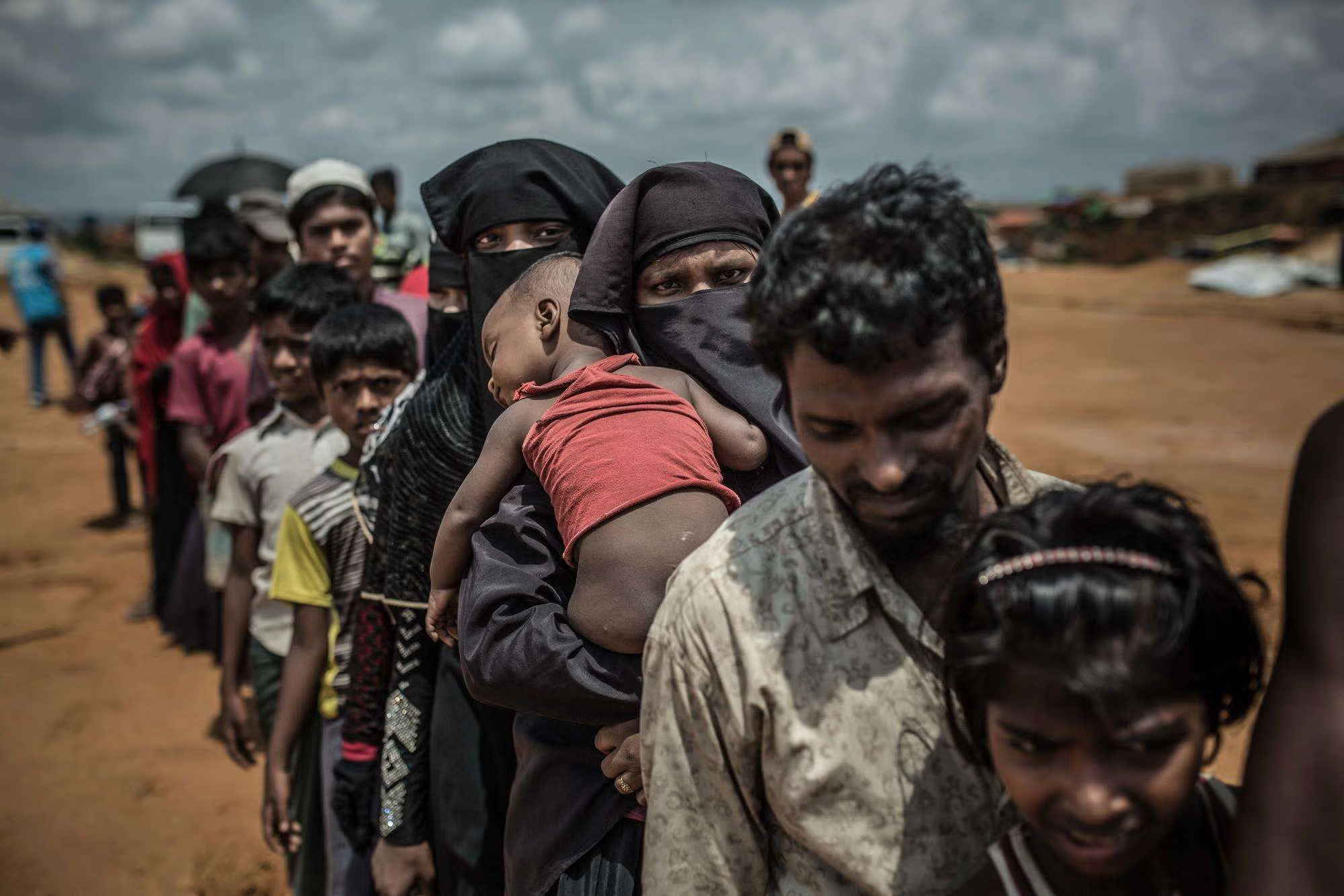
Eight years ago, on August 25, 2017, large-scale military operations by Myanmar’s security forces in northern Rakhine (Arakan) resulted in the mass killing, sexual violence, and displacement of Rohingya civilians.
Independent investigations and survivor testimonies indicate that more than 700,000 people fled to Bangladesh, following the destruction of villages and widespread human rights violations.
These events have been recognized internationally as constituting crimes of genocide and crimes against humanity.
Continuing Patterns of Persecution
Although the 2017 operations marked the most visible phase, persecution against the Rohingya has persisted.
In recent years, new patterns of violence have emerged, involving both Myanmar’s military junta and the terrorist Arakan Army (AA).
Since 2022, the AA has conducted multiple assaults against Rohingya communities— including forced displacement, abductions, and targeted killings.
In August 2025, incidents in Buthidaung reportedly led to the expulsion of entire Rohingya populations and the burning of civilian homes.
These acts mirror earlier tactics used by the Myanmar military, indicating a continuing campaign of collective persecution aimed at the removal of the Rohingya population from parts of Arakan.
Today, Rohingya civilians face a dual threat: repression and forced conscription by the Myanmar junta on one side, and persecution by the terrorist Arakan Army (AA) on the other.
This dynamic underscores a multi-actor environment of impunity, where civilians continue to bear the cost of overlapping power struggles.
Failures of the International Response
Eight years after the atrocities of 2017, international accountability remains limited.
While several UN mechanisms have recognized the events as genocide, there has been no effective referral to the International Criminal Court (ICC).
The UN Security Council remains divided, and ASEAN’s principle of non-interference continues to limit its response.
Although the Organization of Islamic Cooperation (OIC) has provided support in international legal forums, broader coordination has yet to materialize.
Meanwhile, humanitarian aid reductions in Bangladesh have further deteriorated living conditions for over one million refugees.
The lack of decisive action underscores the weakness of the global atrocity-prevention framework, exposing structural failures in protecting vulnerable populations.
Identity and Rights
The Rohingya are an indigenous community of Arakan with centuries of historical presence.
Efforts to deny this identity or erase historical continuity perpetuate discrimination.
The 1982 Citizenship Law, which stripped the Rohingya of legal recognition, remains the legal foundation of exclusion.
A sustainable peace in Myanmar requires the restoration of citizenship, equality, and freedom of movement for the Rohingya population.
Resilience and Future
Despite displacement and statelessness, the Rohingya community continues to demonstrate resilience through education, advocacy, and cultural preservation.
The pursuit of justice and the right of safe, dignified return remain central to their aspirations.
ASF acknowledges the continued contributions of Rohingya scholars, youth, and community leaders working to preserve historical truth and build informed dialogue for future coexistence.
Accountability and the Way Forward
ASF reiterates the need for:
-
Full international criminal accountability for all actors responsible for genocide, including both the Myanmar military and terrorist Arakan Army (AA) leadership.
-
Targeted sanctions against entities financing or supporting atrocities.
-
Protection mechanisms for Rohingya civilians in both Rakhine and refugee contexts.
-
Inclusion of Rohingya representatives in all discussions on repatriation and peacebuilding.
The events of 2017 and those unfolding today reflect a continuing crisis of impunity.
Justice, documentation, and truth remain the essential pillars for any future reconciliation and stability in the Arakan region.
Conclusion
The memory of 2017 stands as both a record of atrocity and a call to accountability.
Eight years later, the Rohingya crisis remains unresolved, with new layers of violence emerging.
ASF reaffirms its commitment to objective analysis, verified documentation, and policy engagement toward an Arakan where facts, not propaganda, define the narrative, and where justice serves as the foundation of lasting peace.