Independent conflict research · Myanmar's western frontier

Analyzing conflict. Exposing networks. Informing policy.
Independent, evidence-led analysis of the Arakan conflict and its regional fallout — verified assessments for the policymakers, diplomats, and researchers who need ground truth ahead of decisions.

Situation snapshot

July 27, 2026

Rohingya worldwide, the world’s largest stateless population
0 M+
people internally displaced inside Myanmar
0 M+
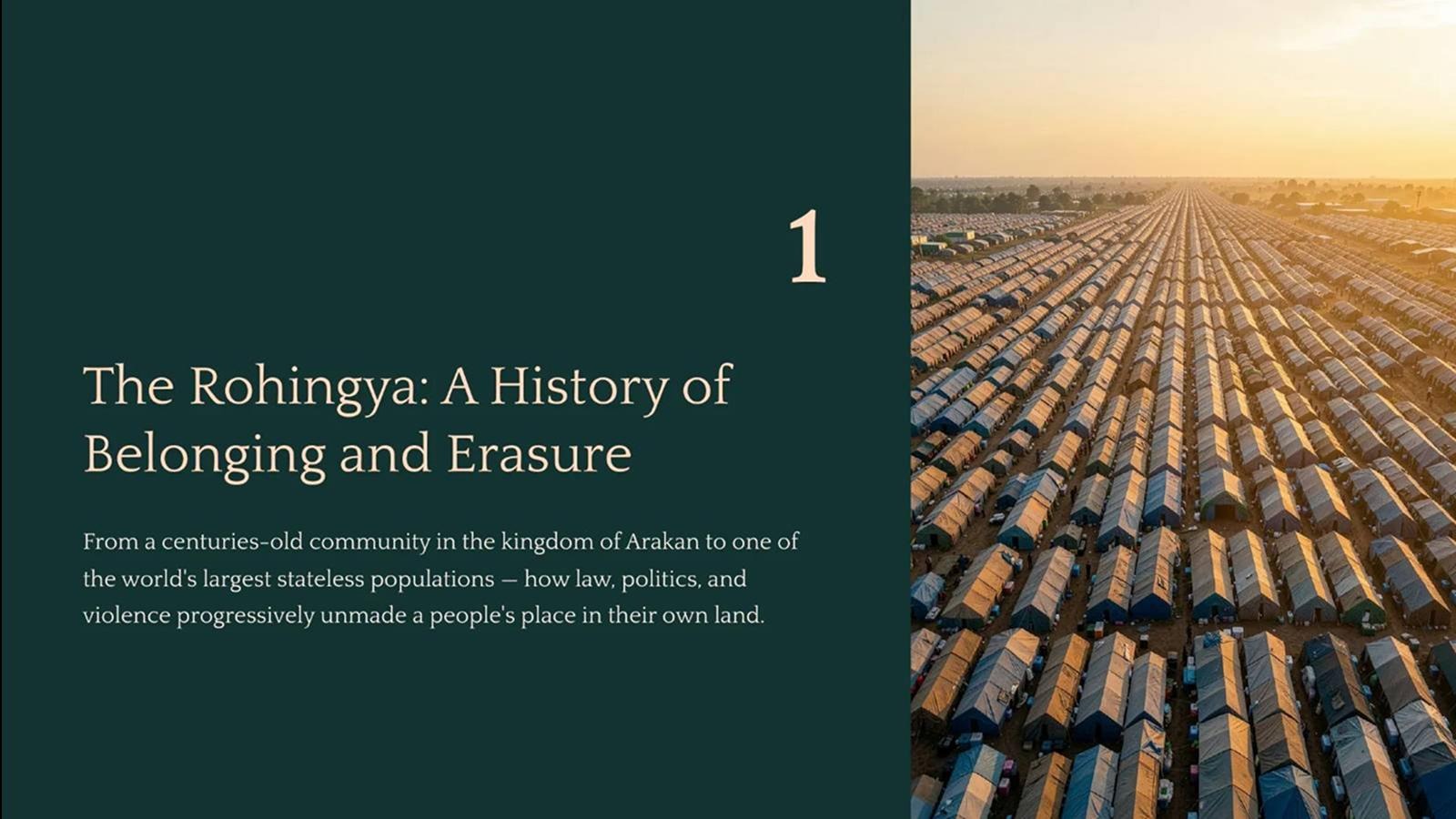
Rohingya trapped in displacement camps in Rakhine
0 K+
Rohingya dead or missing at sea in 2025
0 K+

Figures compiled from multi-source field reporting and OSINT verification

Selected analysis

Special Analysis

Latest analysis

All Analysis

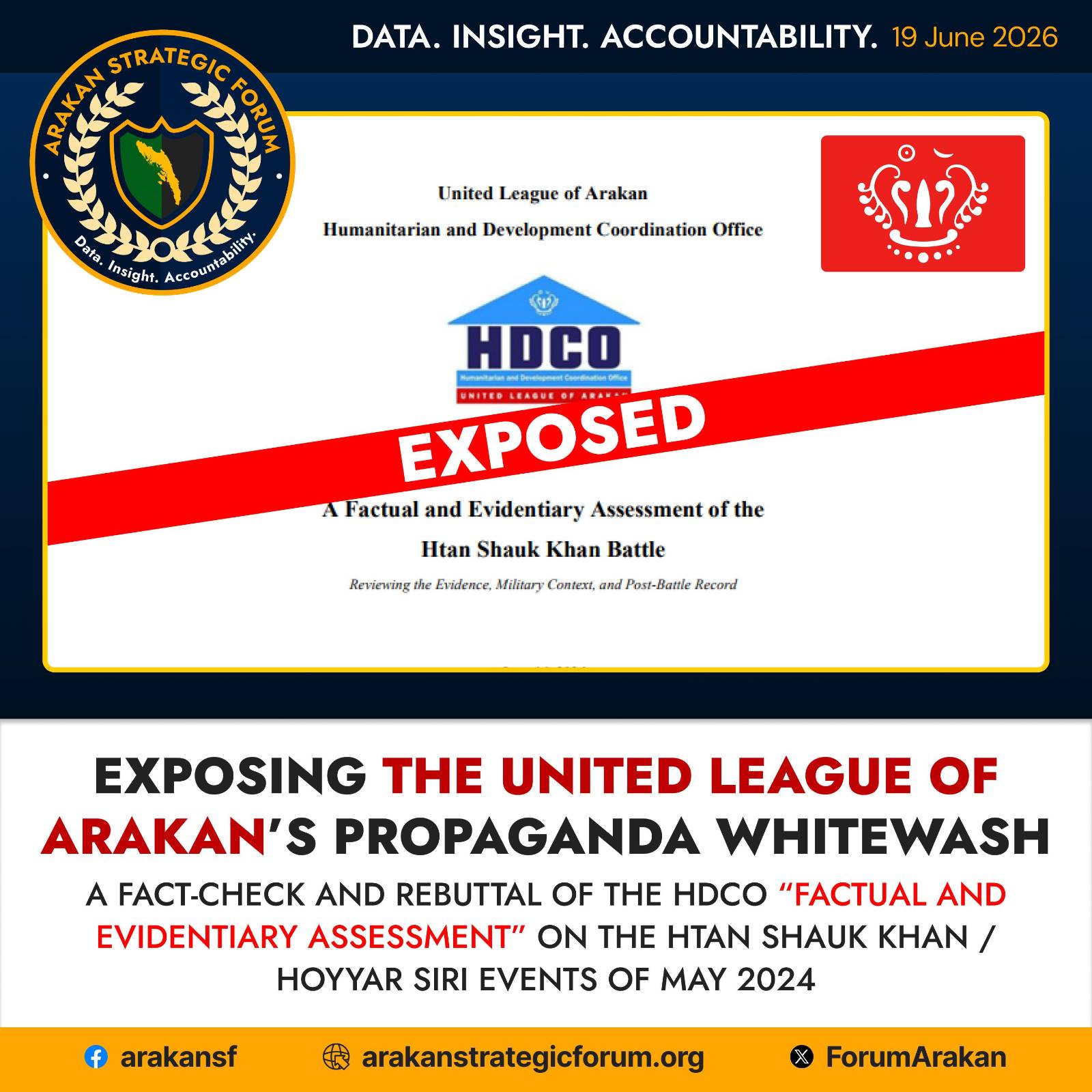
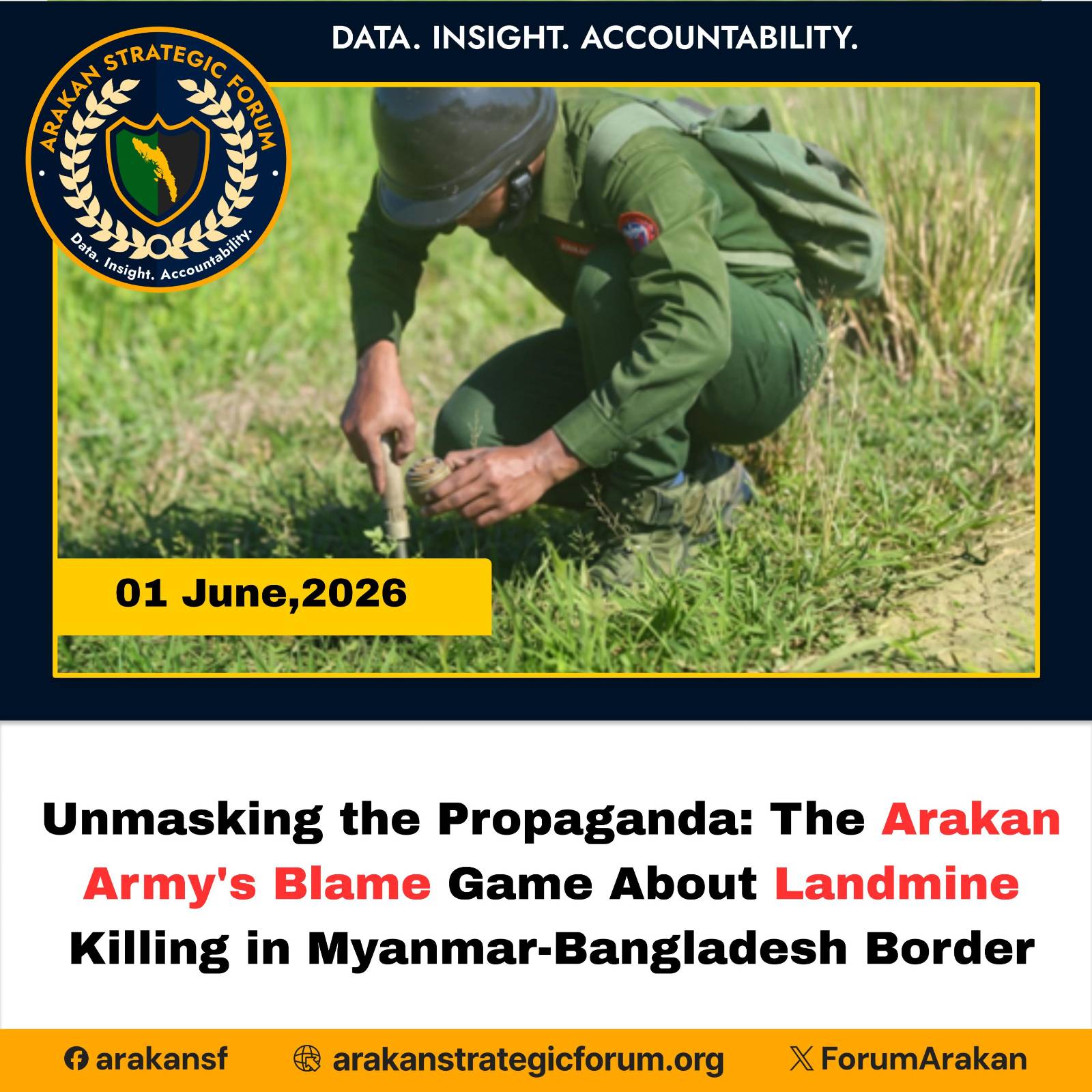
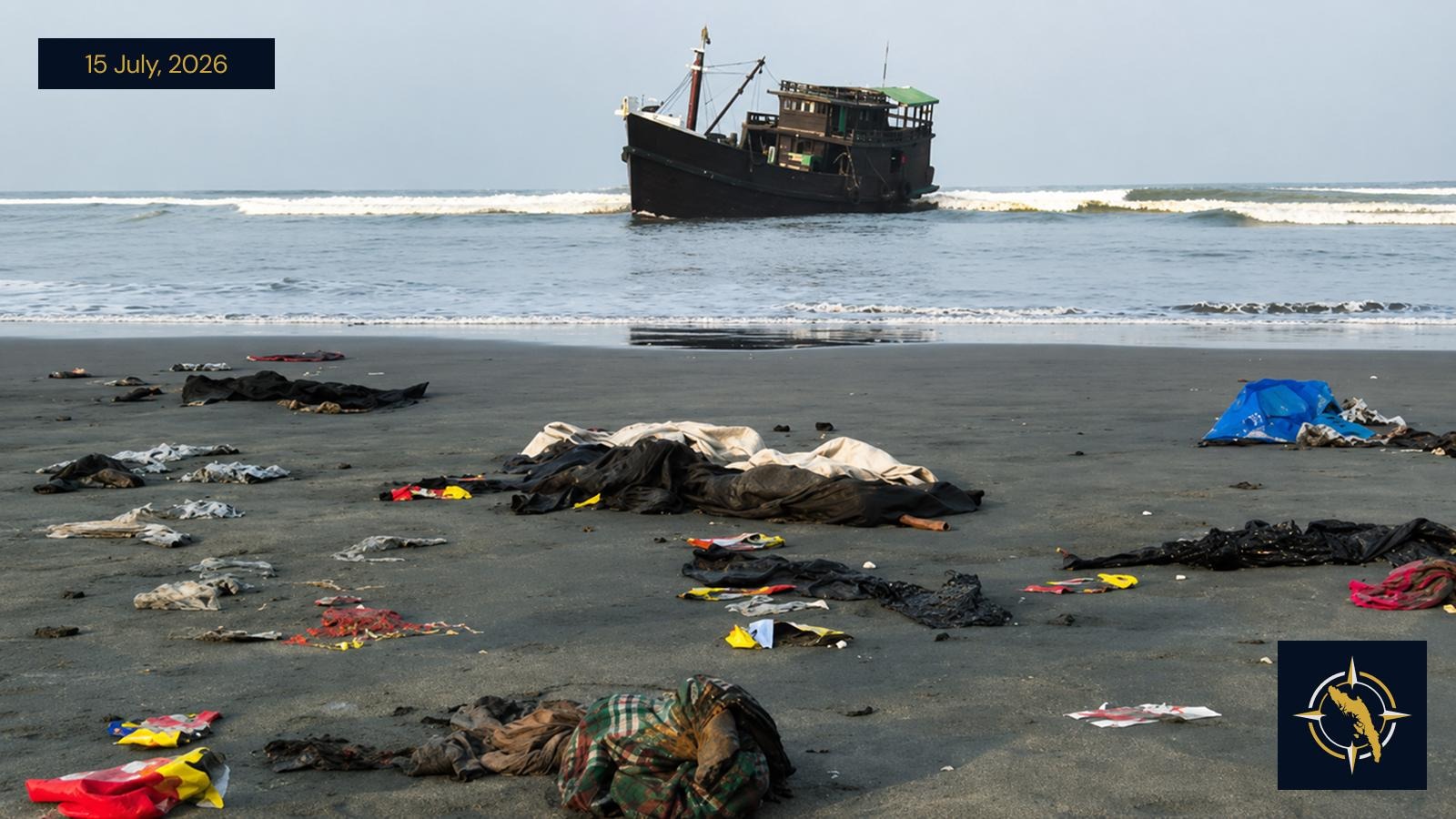
Maritime Death by Design?

The Arakan Army, Rohingya Trafficking and Demographic Control in Arakan State The

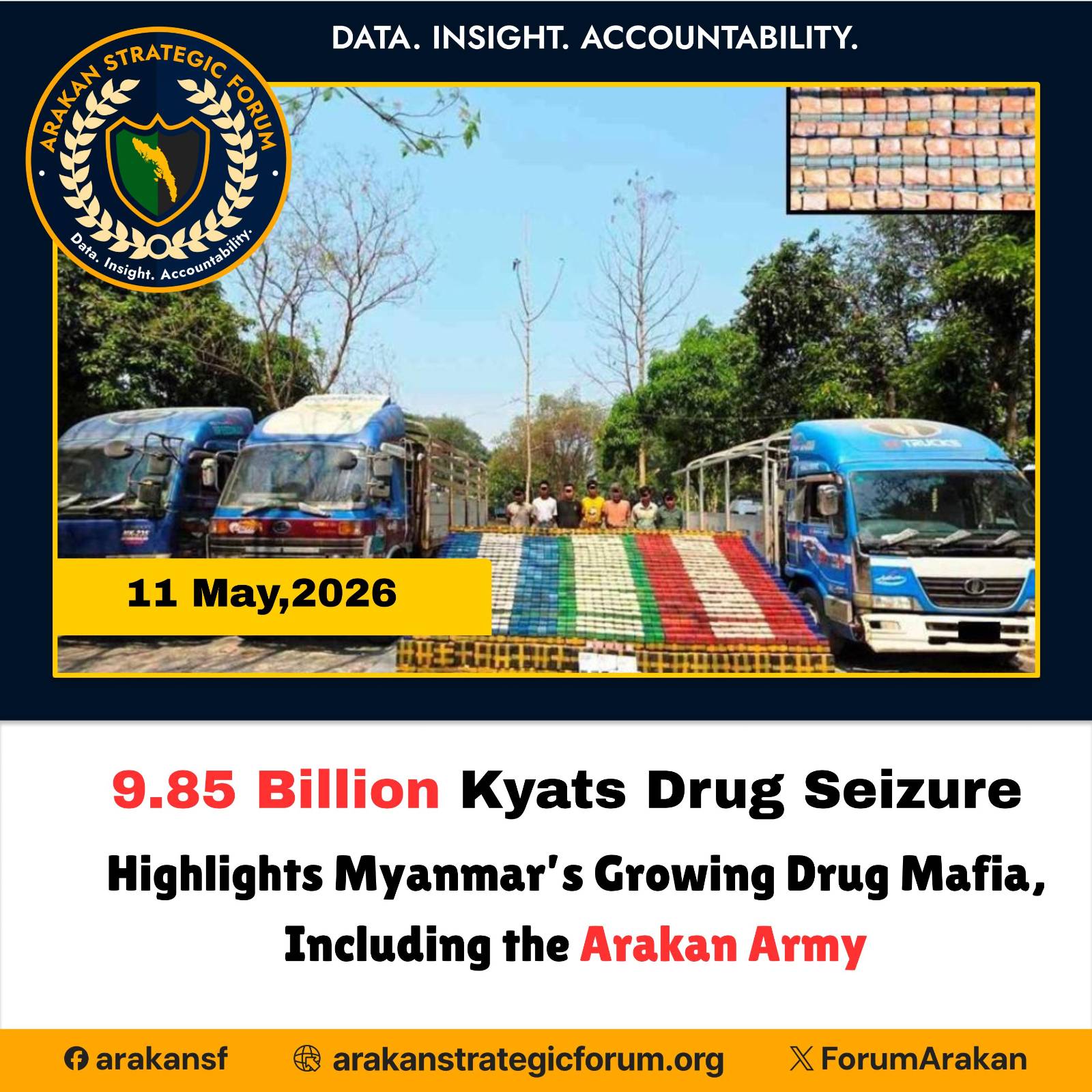
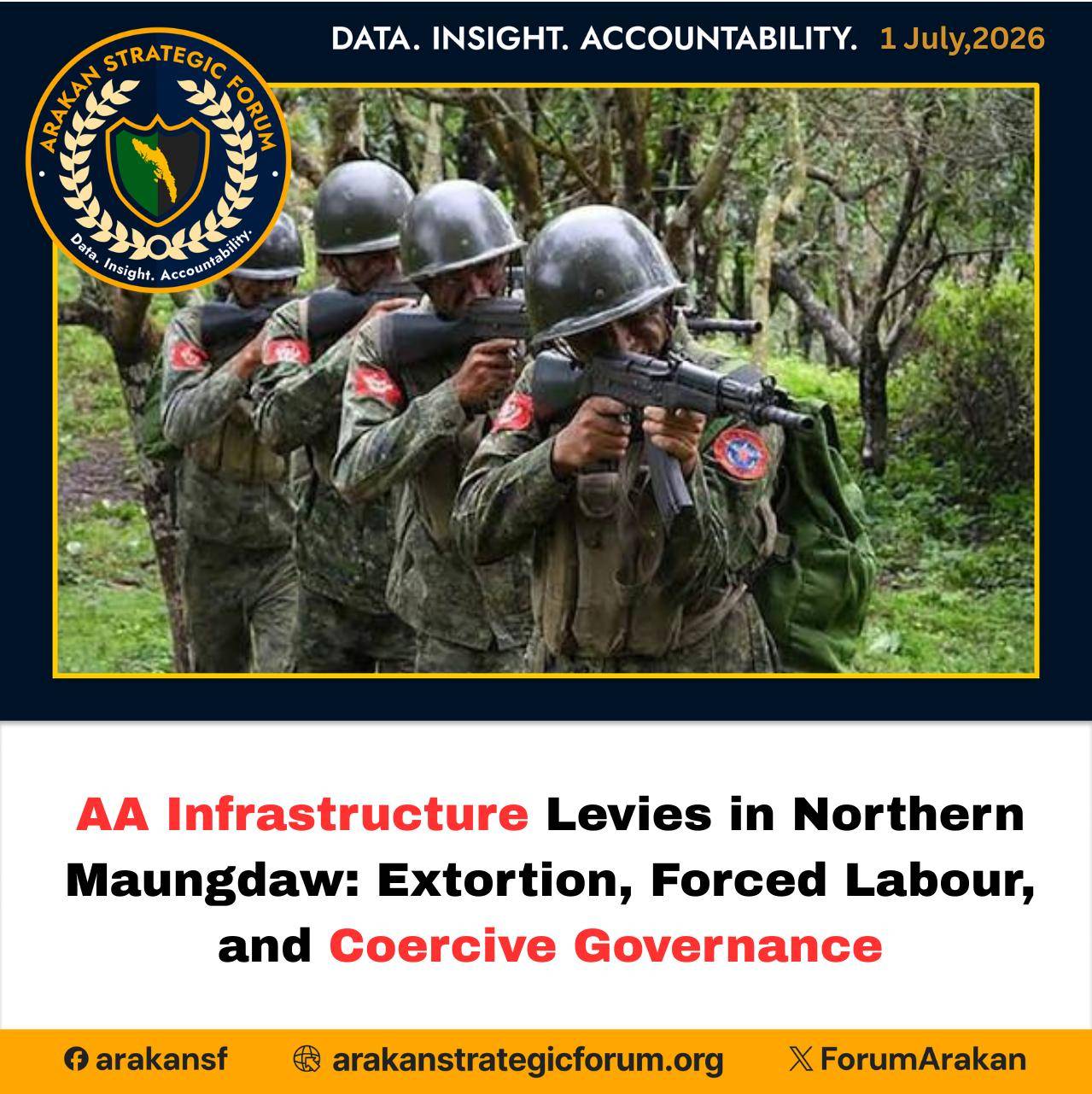
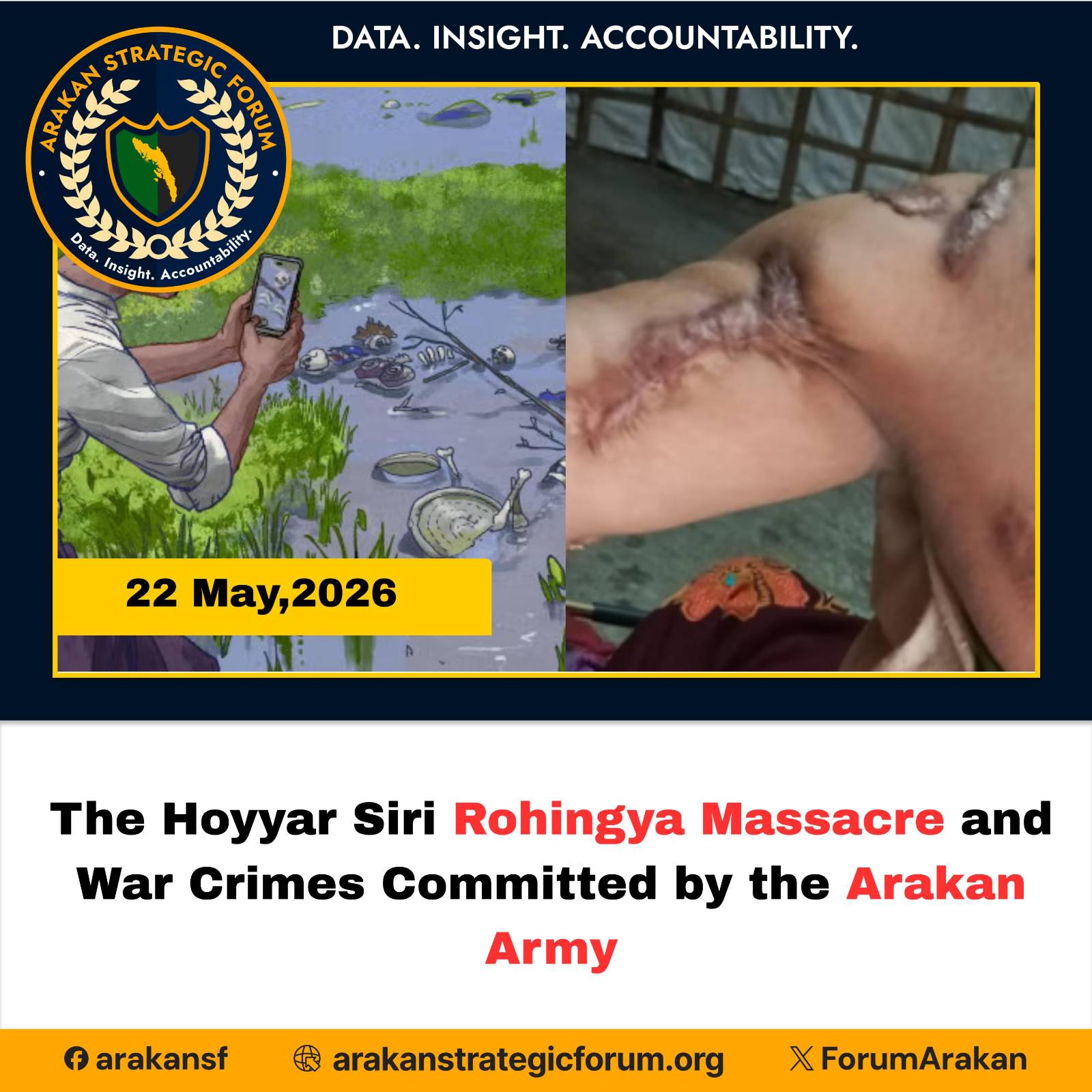
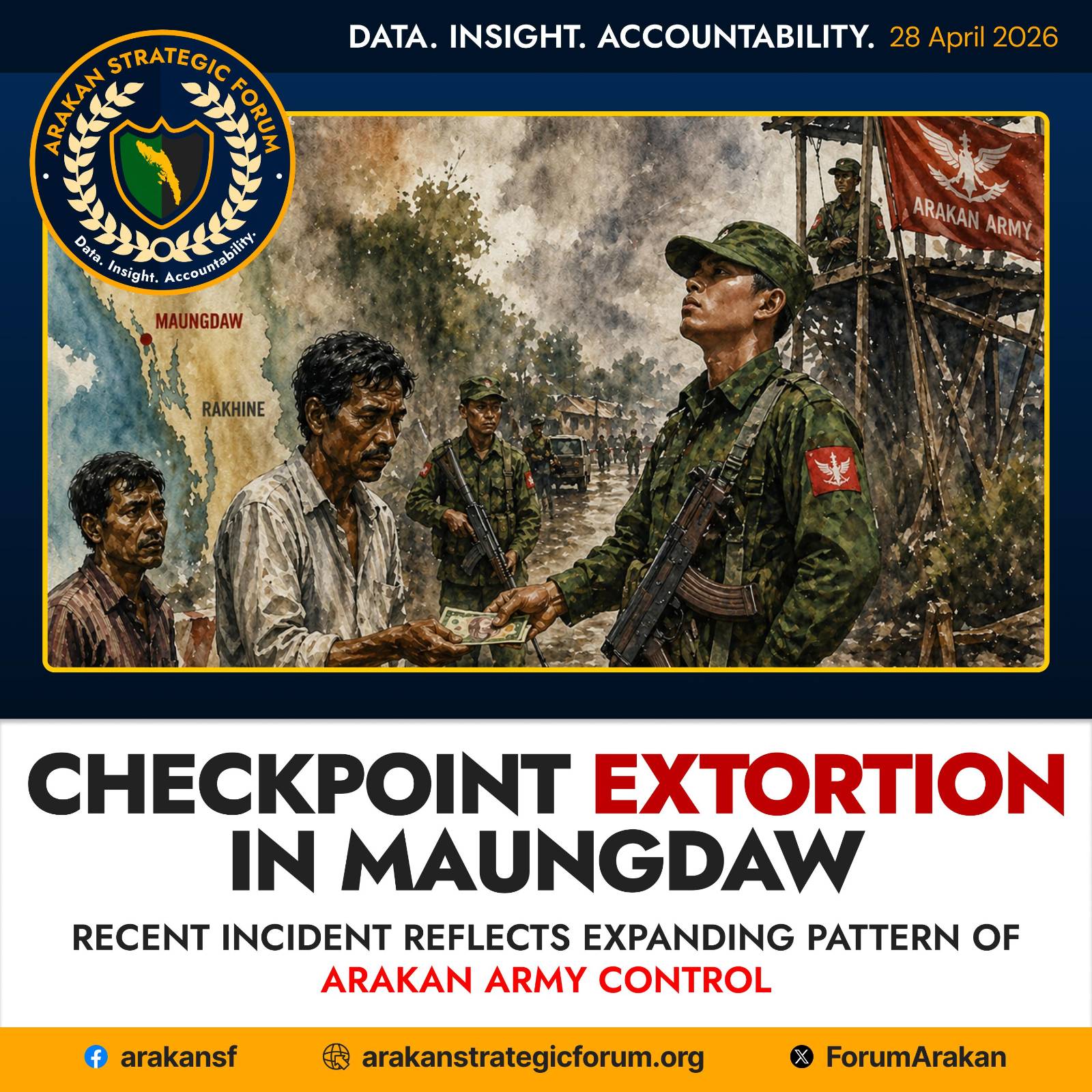
AA Infrastructure Levies in Northern Maungdaw: Extortion, Forced Labour, and Coercive Governance

The terrorist Arakan Army/United League of Arakan (AA/ULA) is reportedly using infrastructure

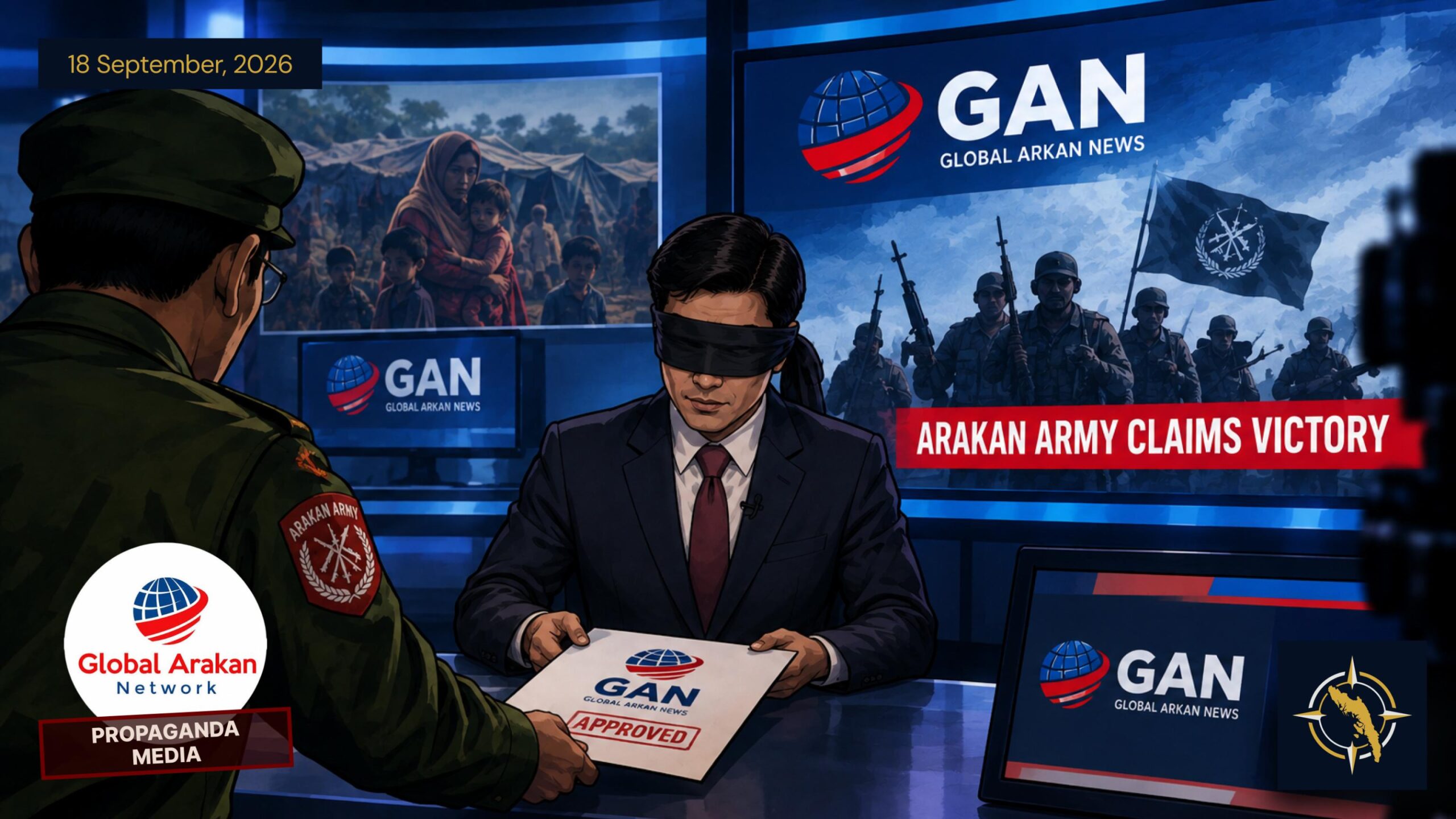
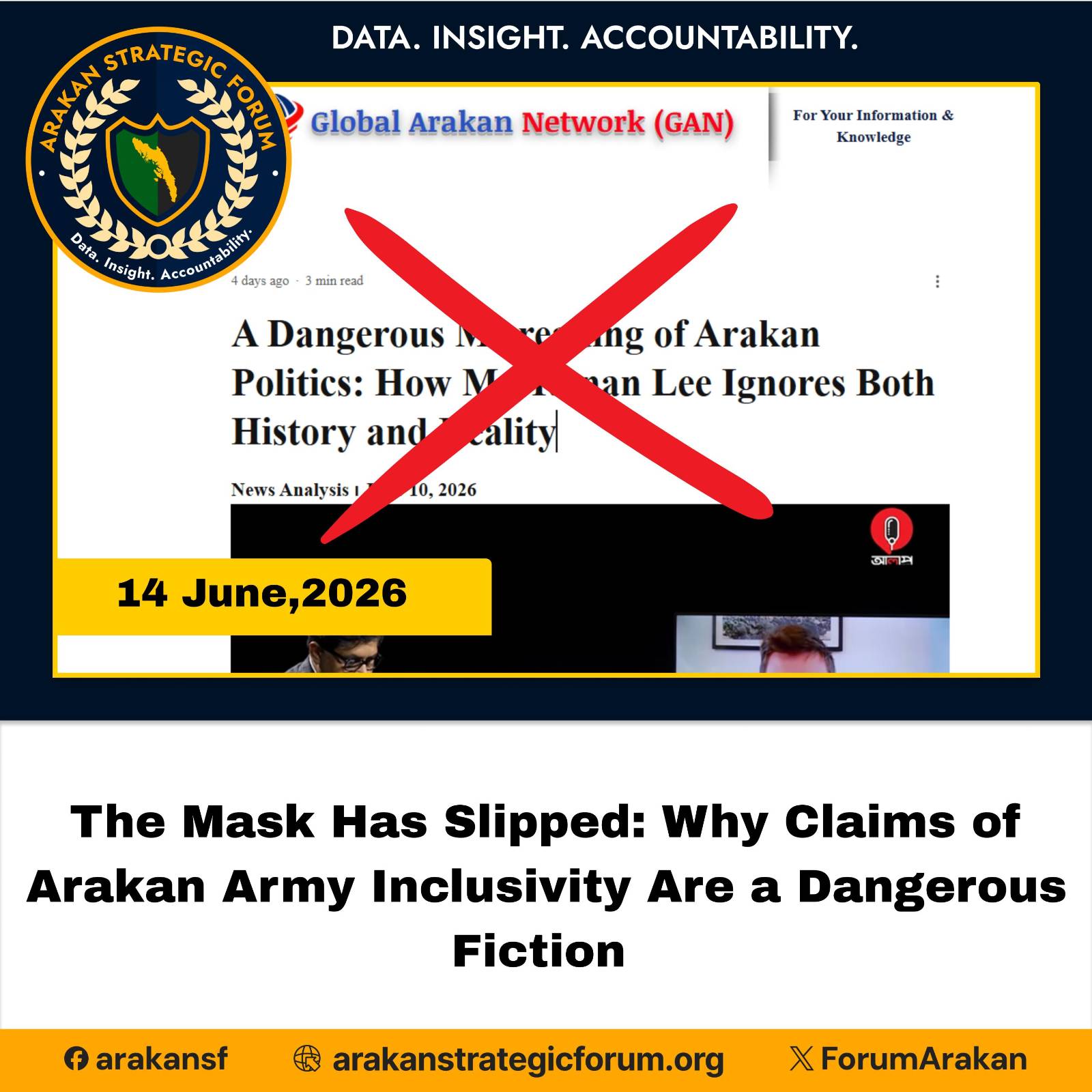
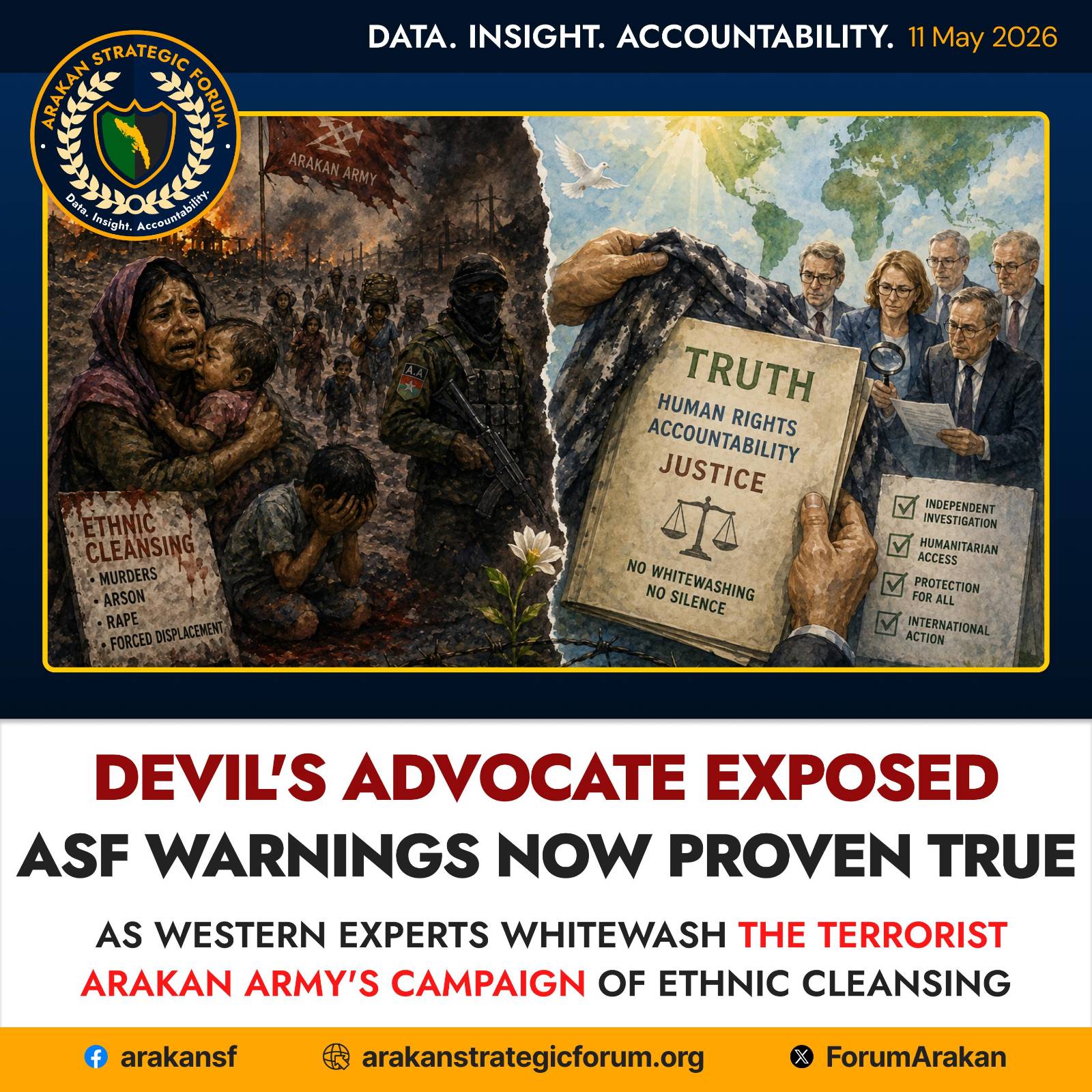
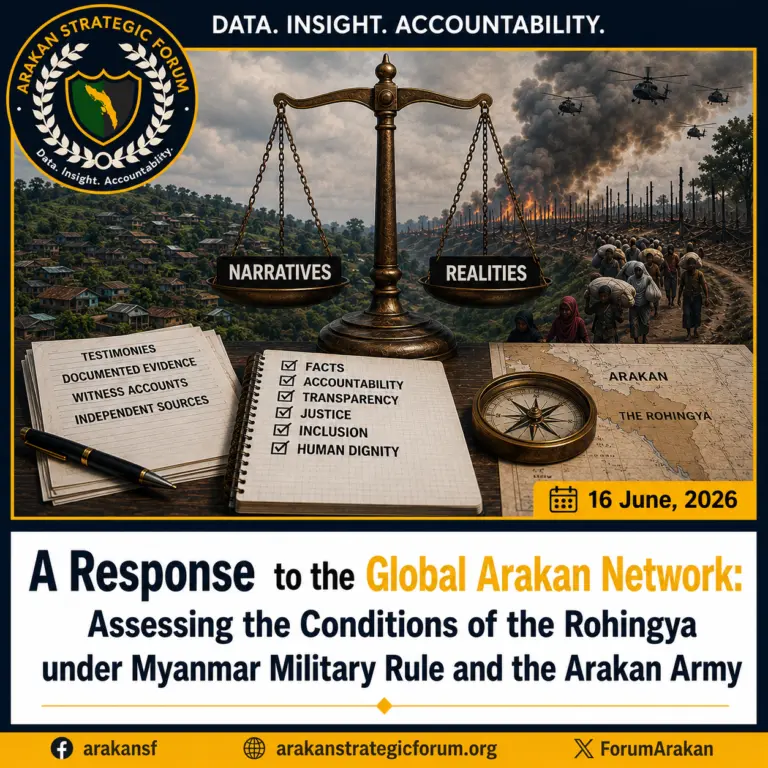
The Mask Has Slipped: Why Claims of Arakan Army Inclusivity Are a Dangerous Fiction

The Global Arakan Network’s recent article, “A Dangerous Misreading of Arakan Politics,”

The Mask Has Slipped: Why Claims of Arakan Army Inclusivity Are a Dangerous Fiction

The Global Arakan Network’s recent article, “A Dangerous Misreading of Arakan Politics,”

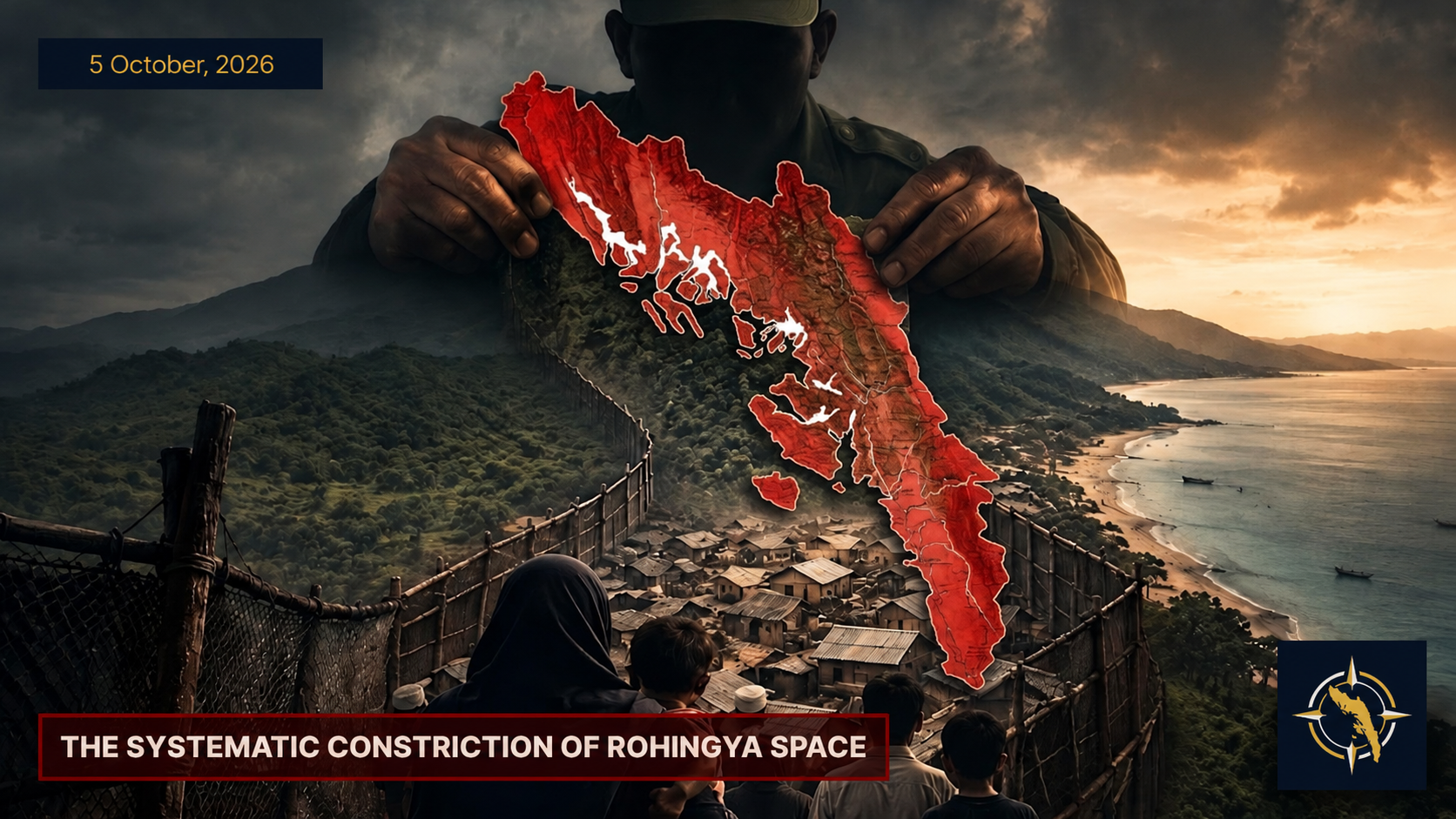
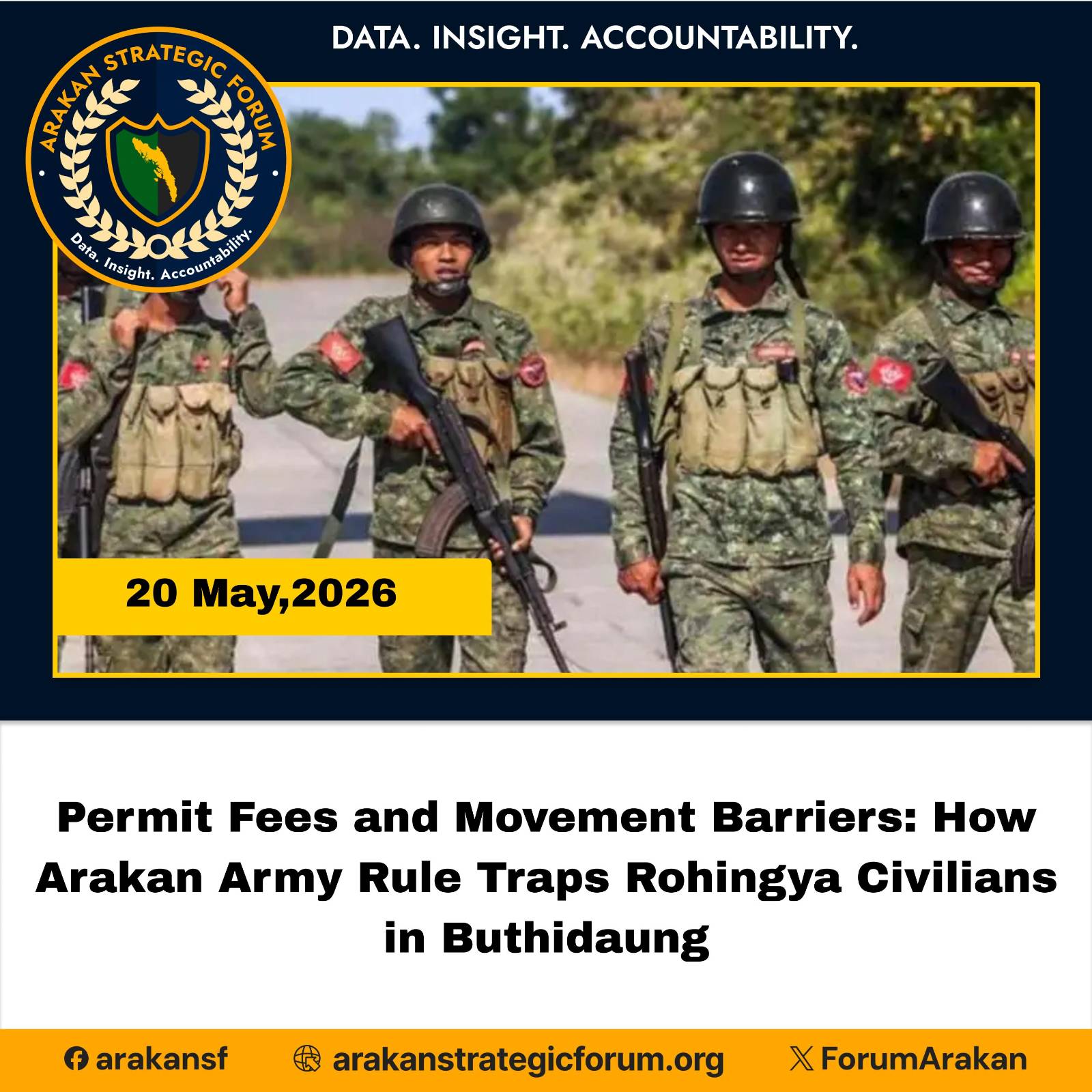
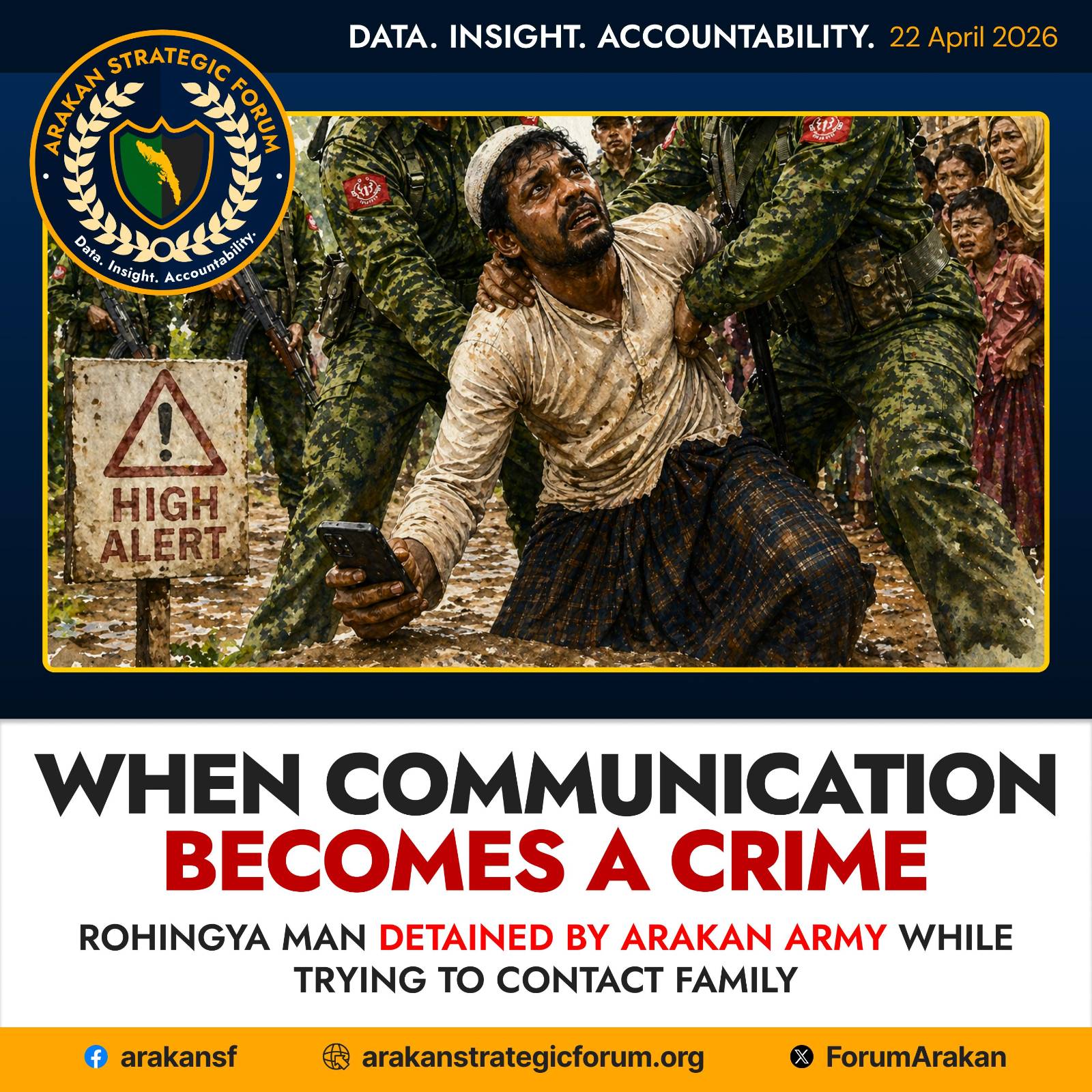
Permit Fees and Movement Barriers: How Arakan Army Rule Traps Rohingya Civilians in Buthidaung

Rohingya residents in Buthidaung Township, Arakan (Rakhine) are facing strict travel restrictions

The crisis in Arakan today

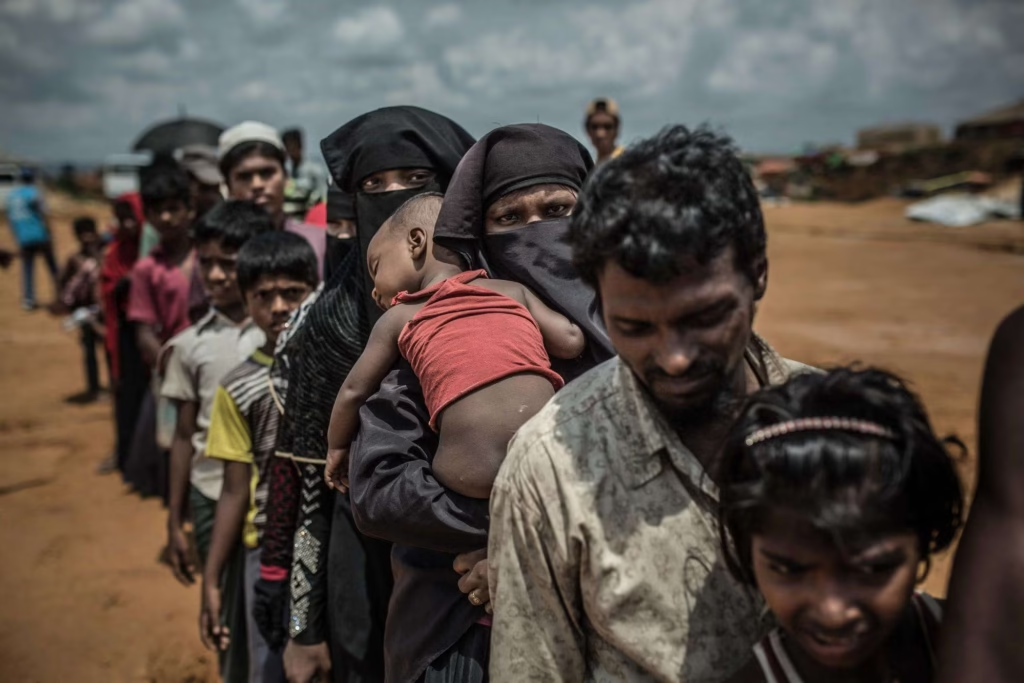
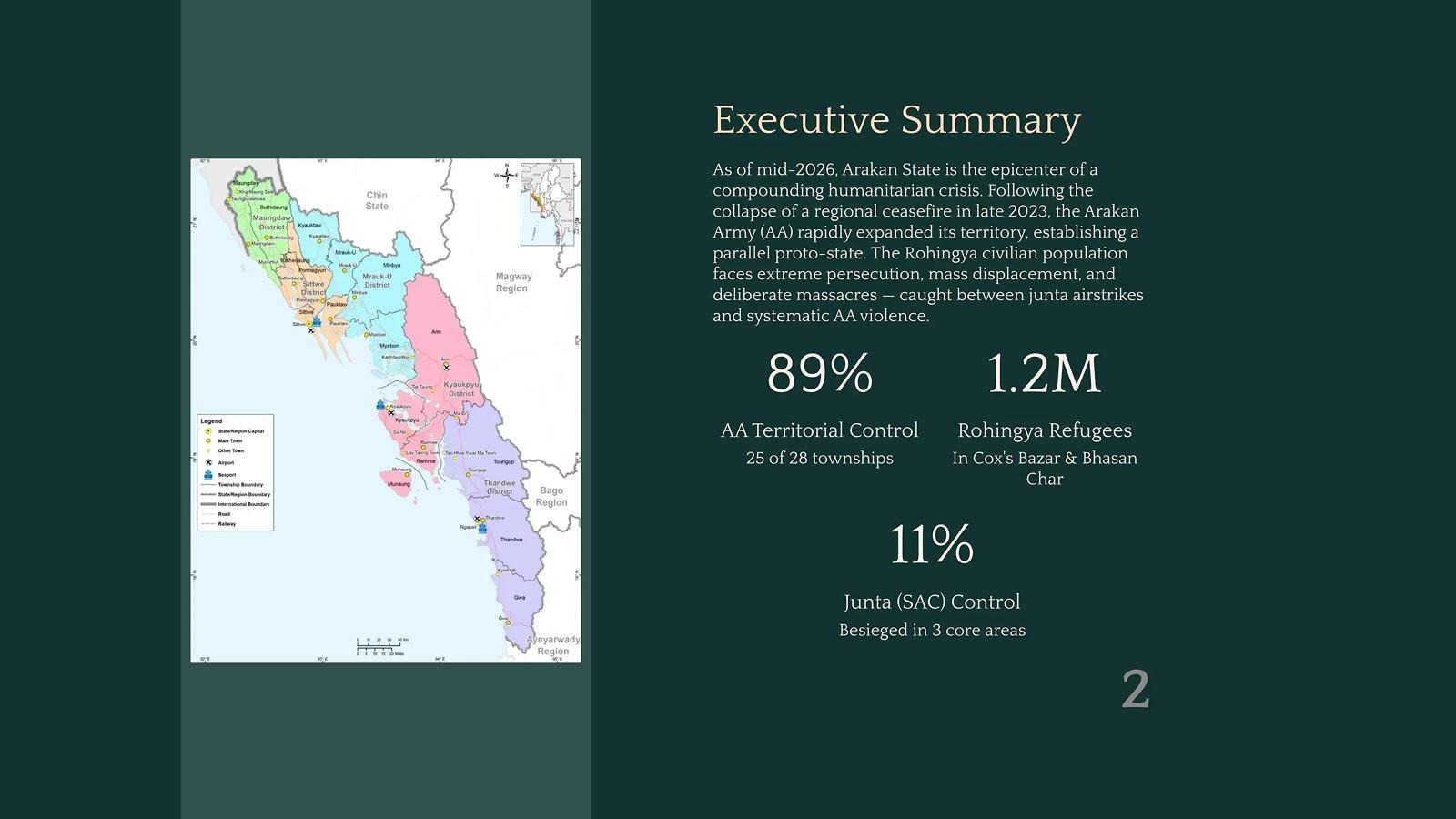
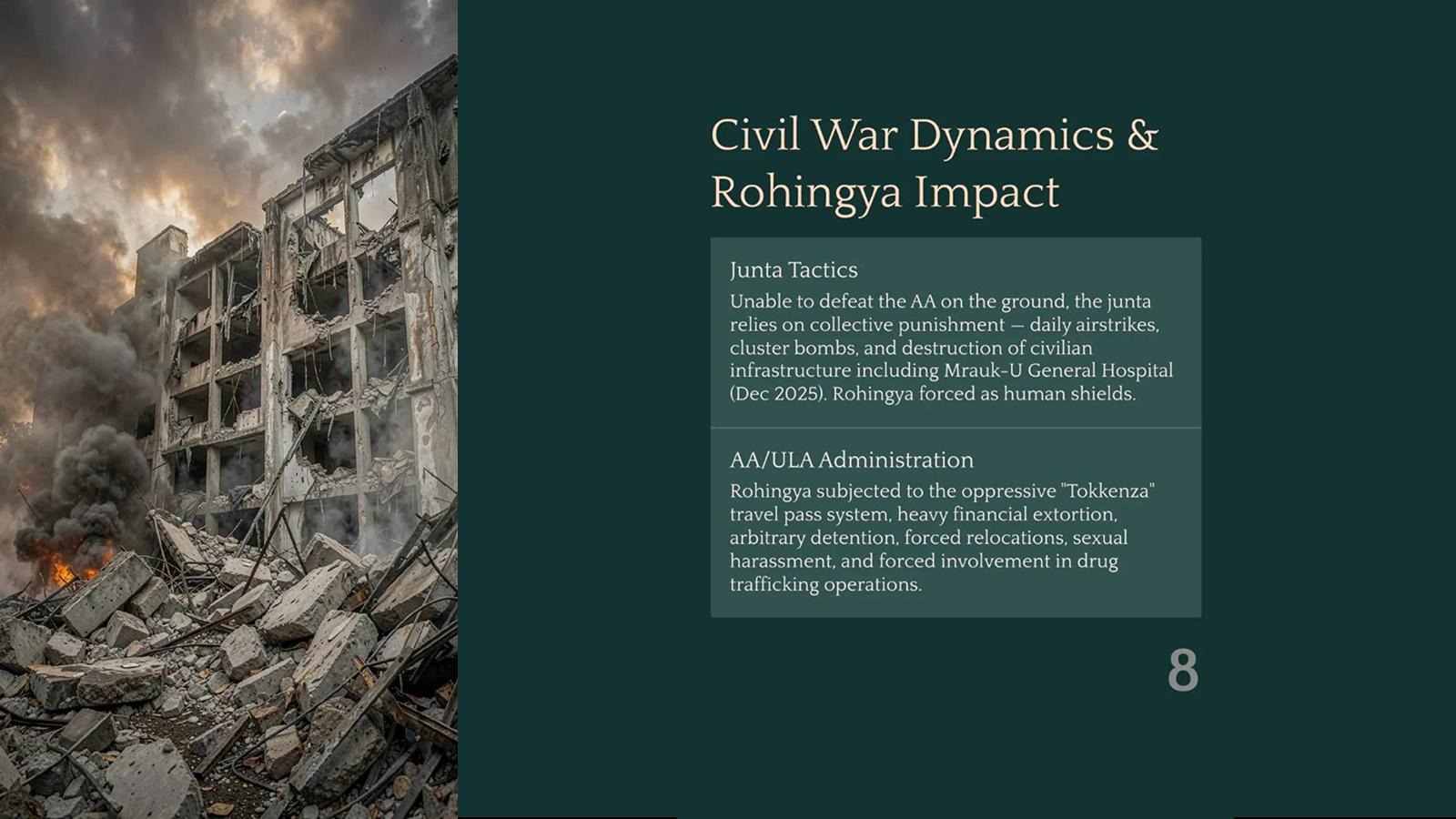
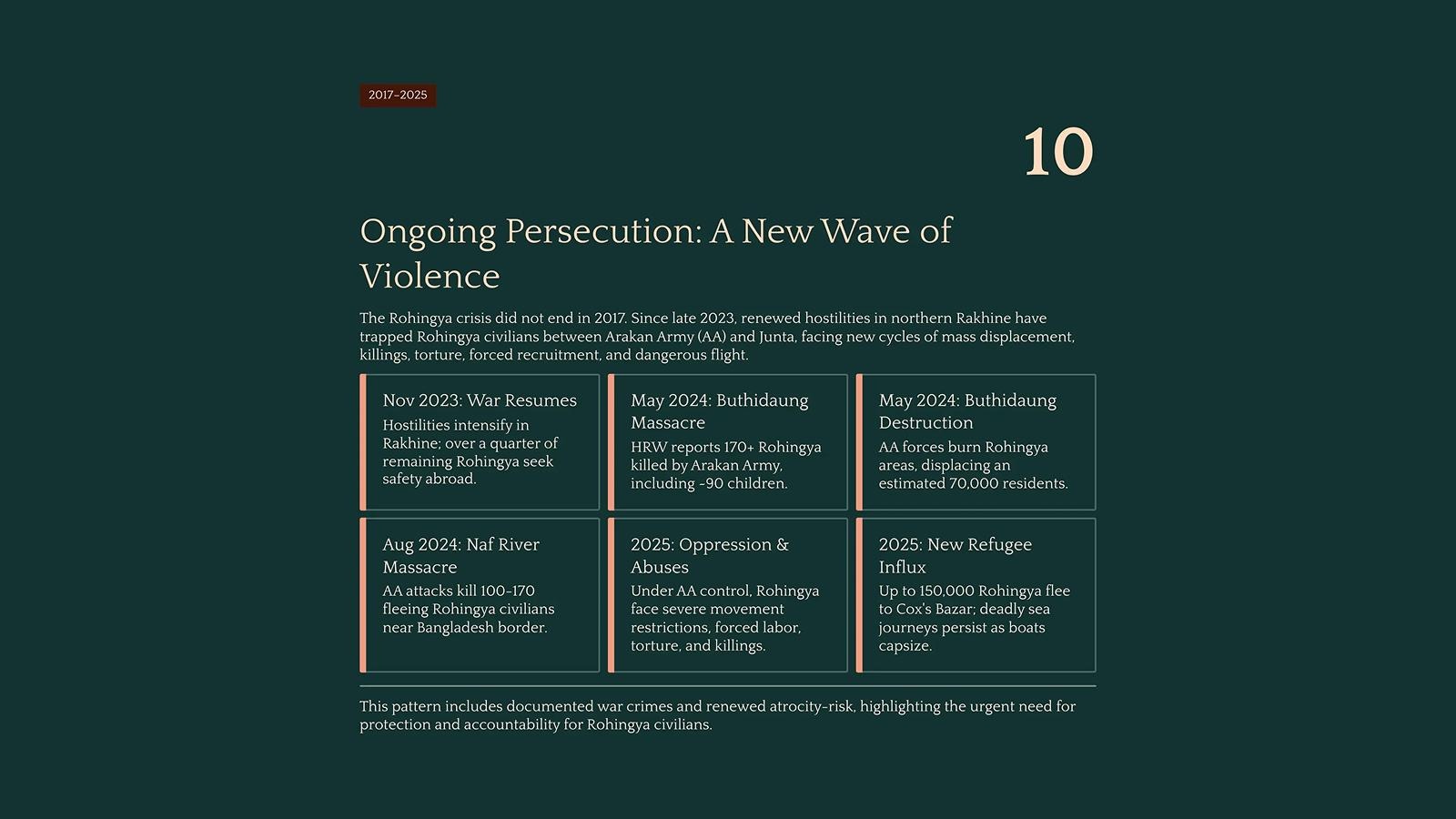
As of mid-2026, Arakan State is the epicenter of a severe Rohingya humanitarian crisis, with civilians trapped between junta airstrikes and Arakan Army violence.

A history of oppression

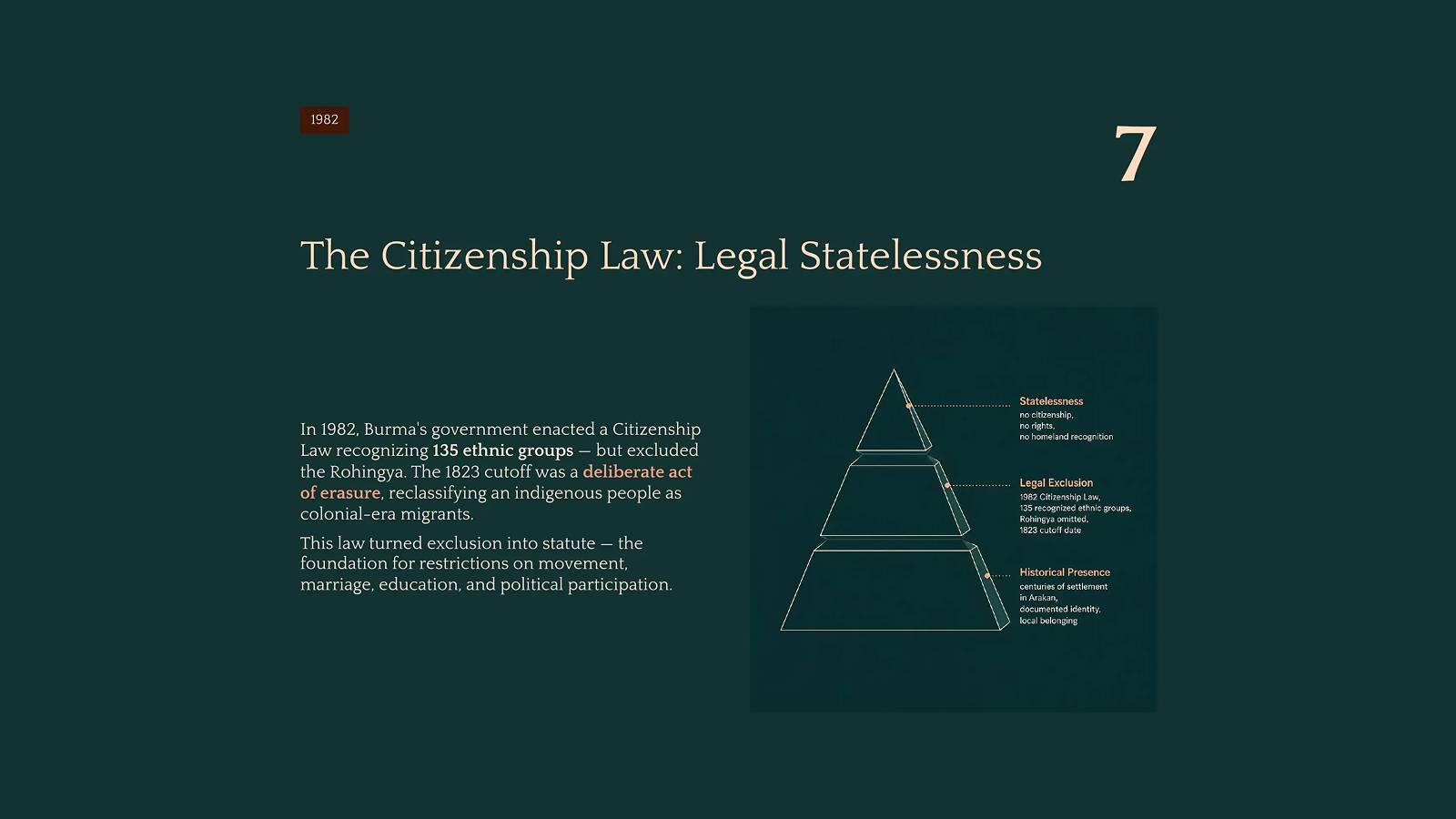
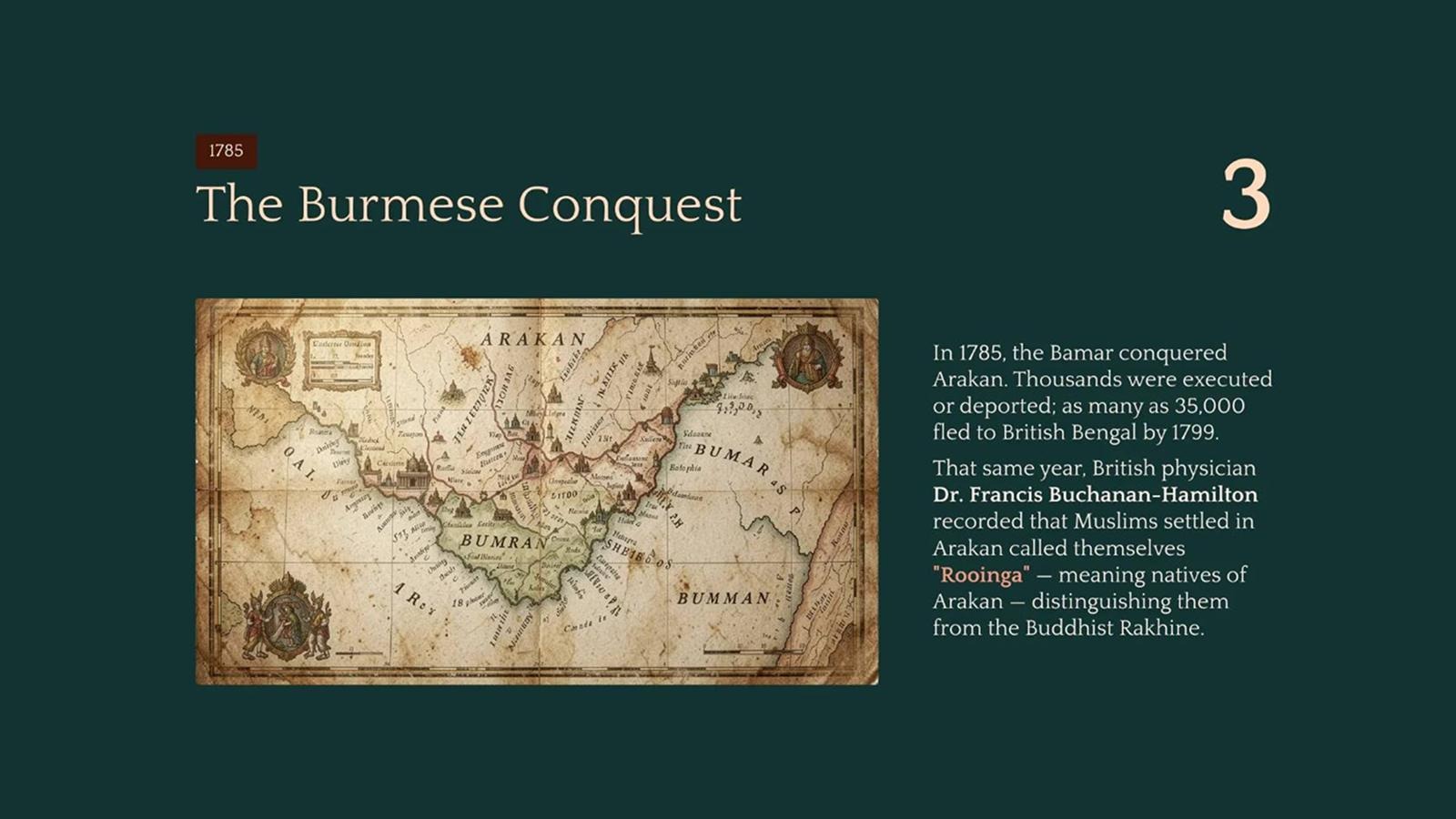
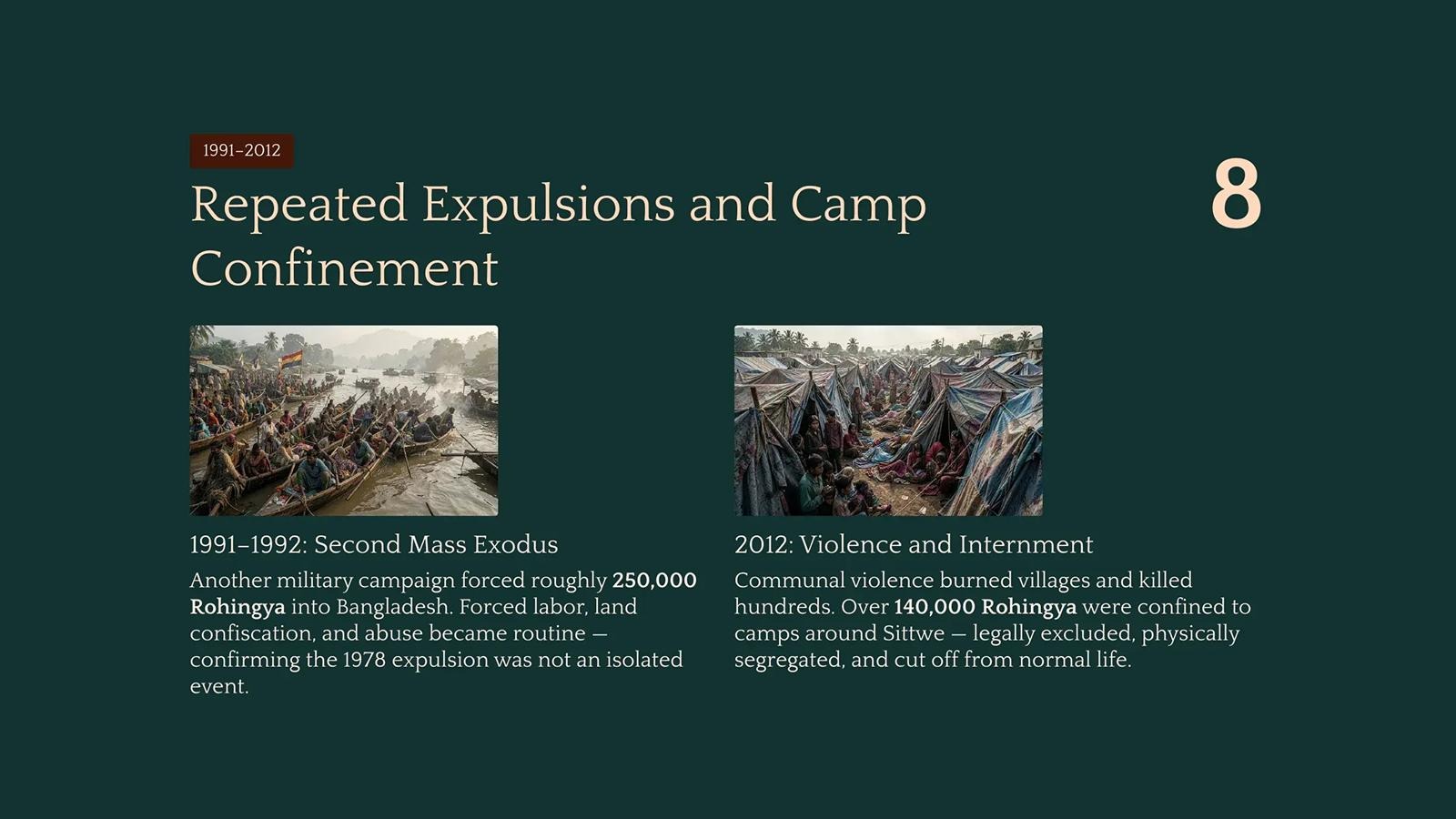
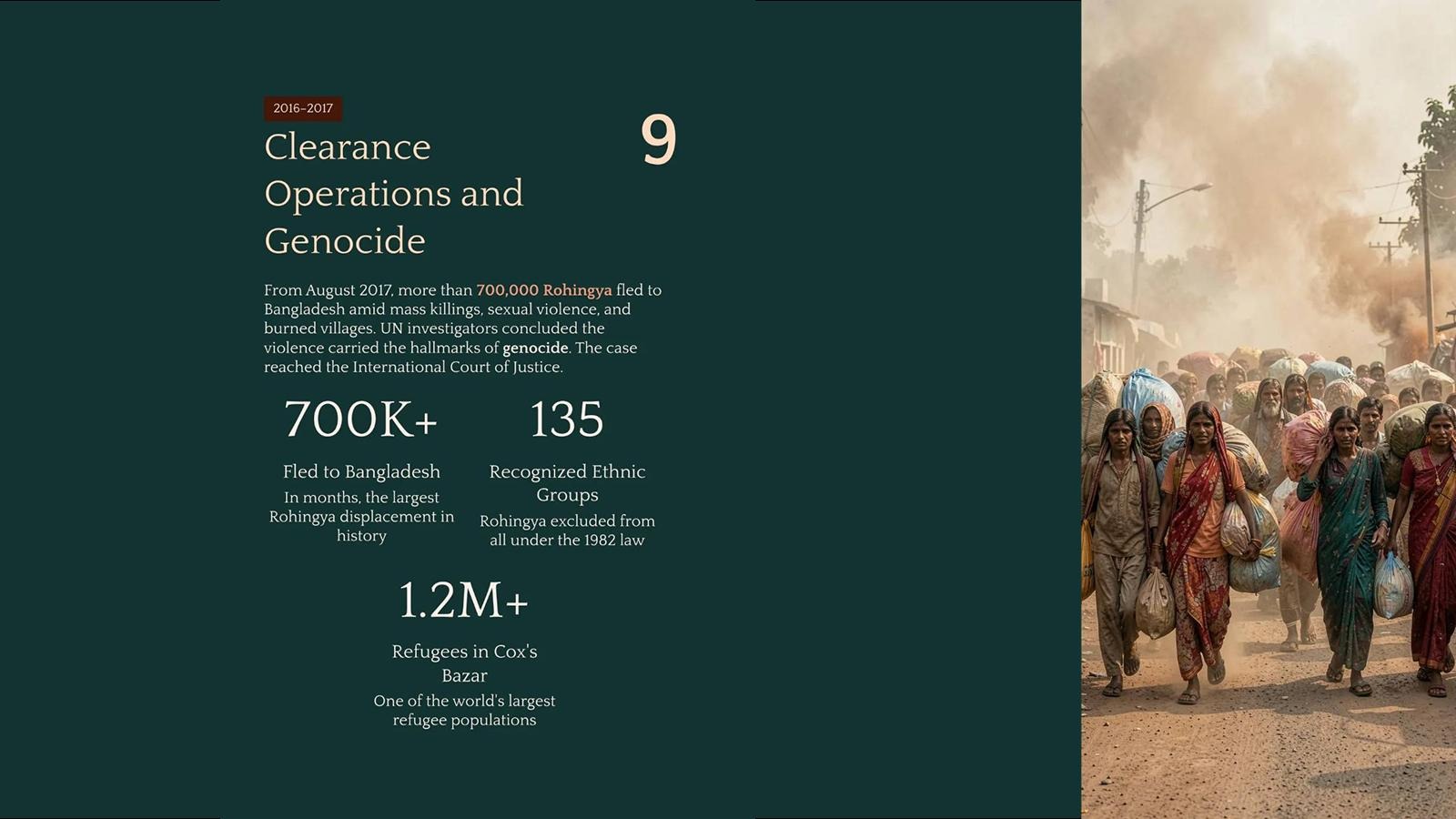
Today's violence is the latest chapter in a decades-long campaign that stripped the Rohingya of citizenship and belonging. From the 1982 Citizenship Law to the mass expulsions of 1978 and 1991, the communal violence of 2012, and the 2017 clearance operations that the UN said bore "the hallmarks of genocide," the pattern is one of escalating erasure.

1982

Citizenship Law renders the Rohingya stateless.

2012

Communal violence; tens of thousands confined to camps.

2017

Clearance operations drive 700,000+ into Bangladesh.

Our research

Five domains where conflict, crime, and displacement intersect

We translate complex realities into verified, intelligence-grade insight — combining open-source intelligence, on-the-ground reporting, and data-driven analysis.

Conflict & security dynamics

Mapping armed actors, territorial changes, and operational trends across Arakan and its borderlands.

Transnational crime & narcotics

Tracking production routes, trafficking networks, and the financial systems sustaining illicit economies.

Humanitarian impact & displacement

Documenting civilian harm, forced migration, and the humanitarian fallout of ongoing conflict.

Information warfare & propaganda

Analyzing digital narratives, state-sponsored disinformation, and influence operations shaping perception.

Policy & regional stability

Translating field intelligence into actionable recommendations for policymakers and stakeholders.

Methodology

How we verify

Who we are

Where facts, not propaganda, define the narrative

ASF brings together field researchers, data analysts, and policy observers to produce verified, intelligence-grade assessments that help governments, media, and humanitarian organizations make informed decisions. We expose propaganda from all sides, document atrocities with evidence, and provide the factual clarity that decision-makers urgently need.

Integrity

All information undergoes multi-source verification before publication.

Neutrality

Analytical independence from all political or armed entities.

Confidentiality

Sources and field data are protected through secure protocols.

Accountability

Every report is open to scrutiny and factual review.