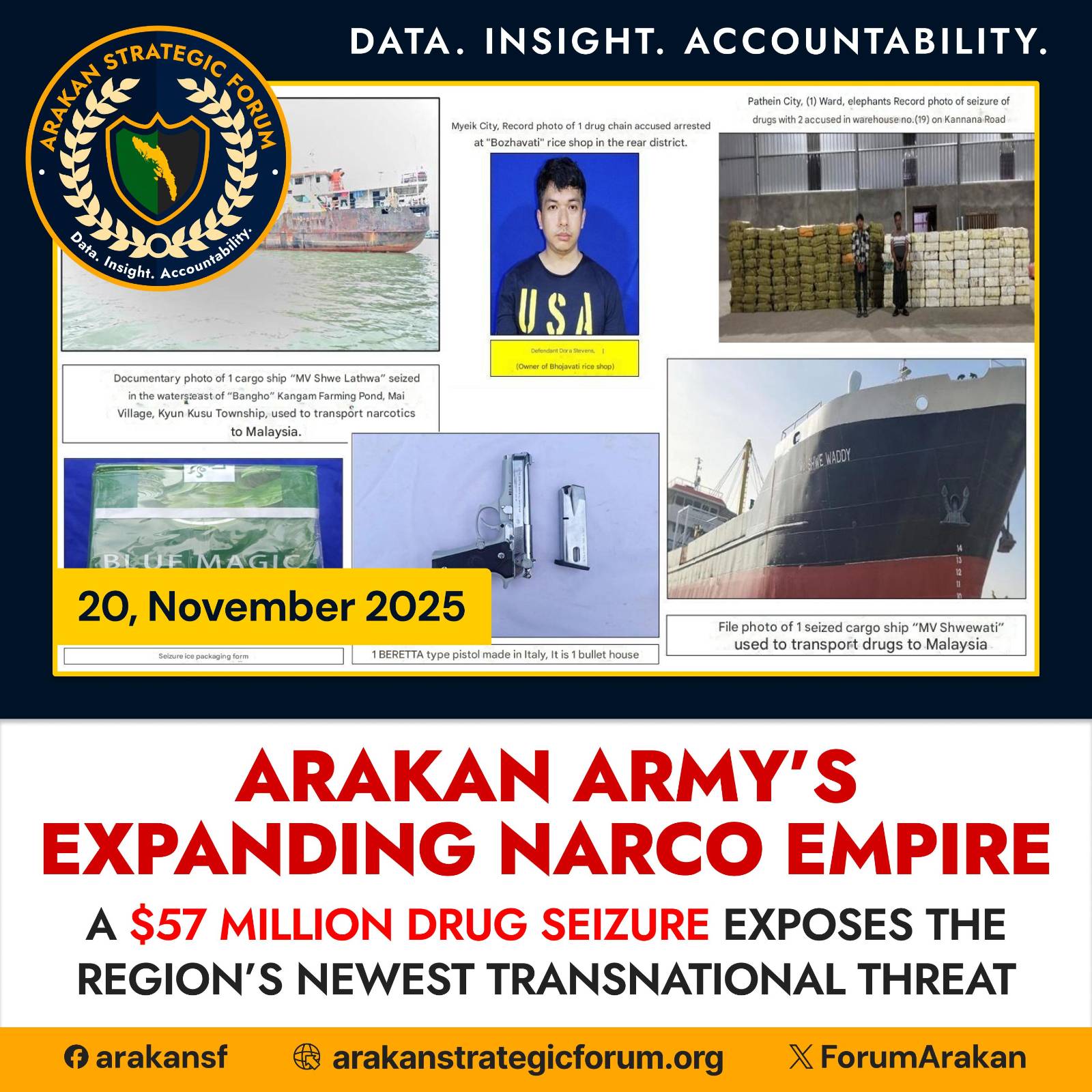
A massive narcotics seizure in early November 2025 has once again exposed the Arakan Army (AA) as one of the most dangerous and fast-growing narco-terrorist networks in Southeast Asia. The latest recovery, 4,000 kilograms of high-purity crystal methamphetamine (ICE) valued at 57.1 million USD, was documented by field investigators through multiple checkpoints, arrest logs, and maritime inspection records. The evidence paints a disturbing picture: AA is no longer just an armed group operating in the shadows of Myanmar’s conflict zones; it has transformed into a vertically integrated drug cartel whose operations now stretch across states, borders, and oceans.
A Regional Drug Mafia, Not an Ethnic Army:
Contrary to its carefully manufactured international image as an “ethnic resistance force,” the Arakan Army has, in practice, evolved into a heavily militarized narcotics syndicate. For years, communities across Arakan and wider Myanmar have reported AA’s deep involvement in meth production, trafficking, and extortion. The latest findings confirm what Rohingya communities have long known: AA’s war chest is funded not by principles of self-determination but by a thriving black-market drug economy (Opium, Yaba, ice, crystal and many more), one that directly fuels violence, ethnic cleansing operations, and repression on Rohingya people.
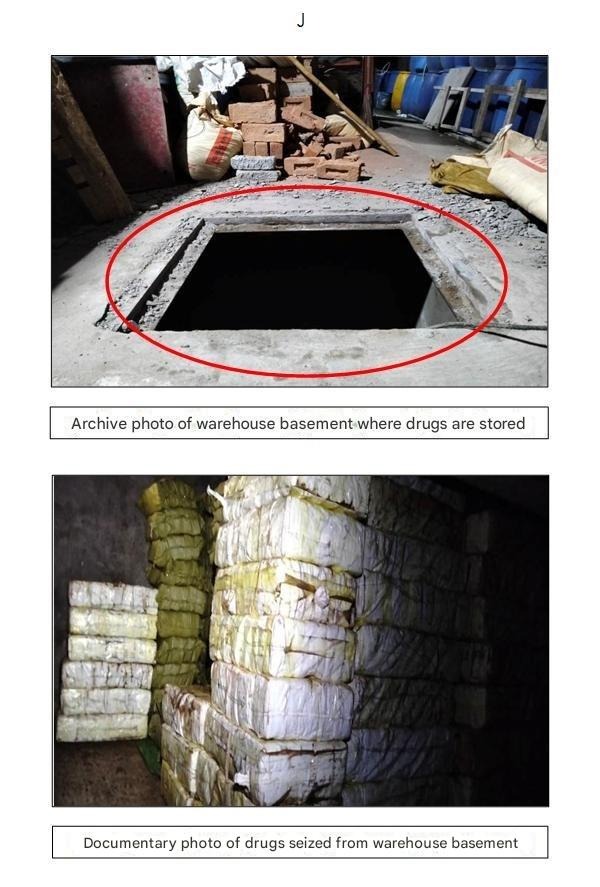
The November incident began when investigators uncovered a vast drug storage facility hidden beneath Warehouse No. 19 in Pathein Township, Ayeyarwady Region of Myanmar.
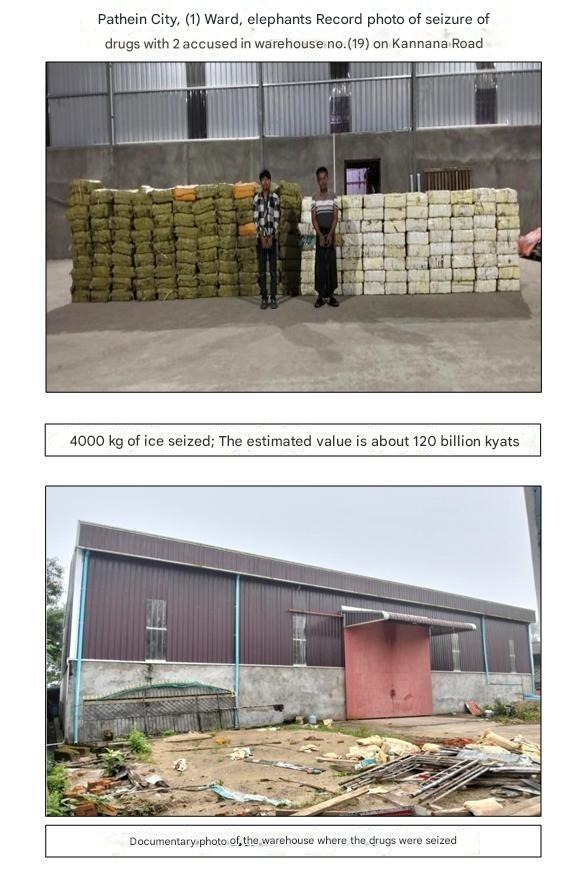
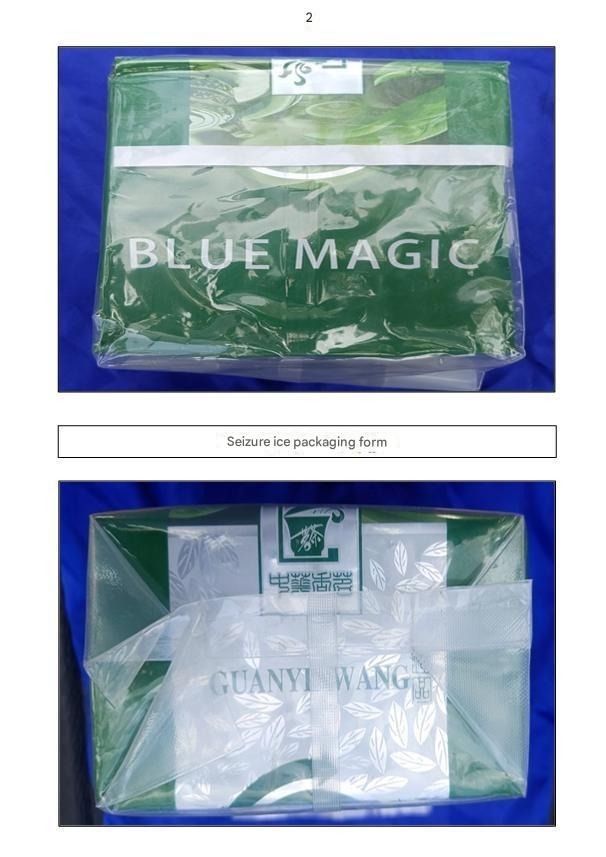
Inside were 4,000 kg of ICE, concealed in modified tanker containers, (a smuggling technique perfected by organized transnational drug rings). Interrogations, maritime logs, and transport records confirmed that the network was not run by independent traffickers but by AA-linked operatives strategically positioned across key logistical zones , in the Ayeyarwady coastal belt (Pathein and Chaung Tha), the national commercial hub (Yangon), and the southern maritime corridor of Tanintharyi Region (Myeik and Kyunsu). Together, these locations form a north-to-south pipeline linking inland drug routes to deep-sea trafficking channels.
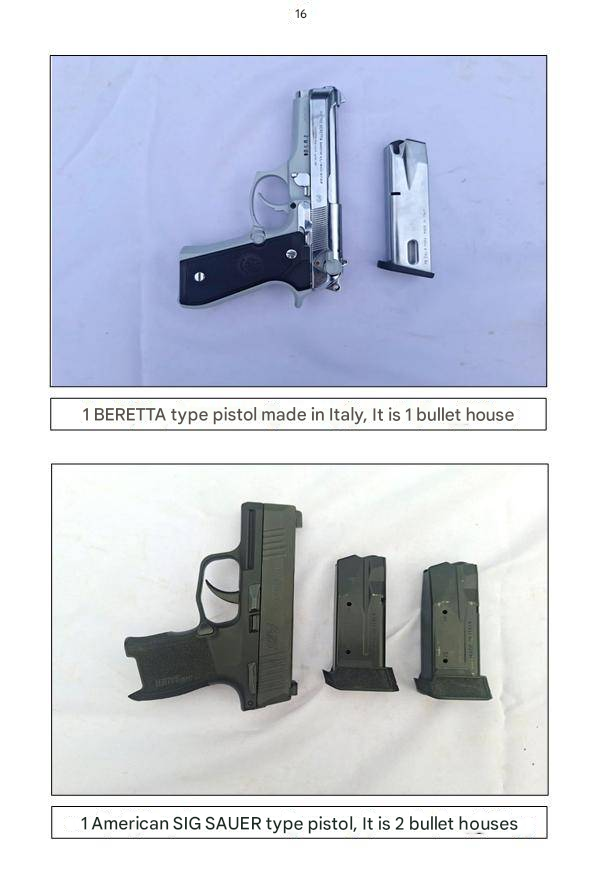
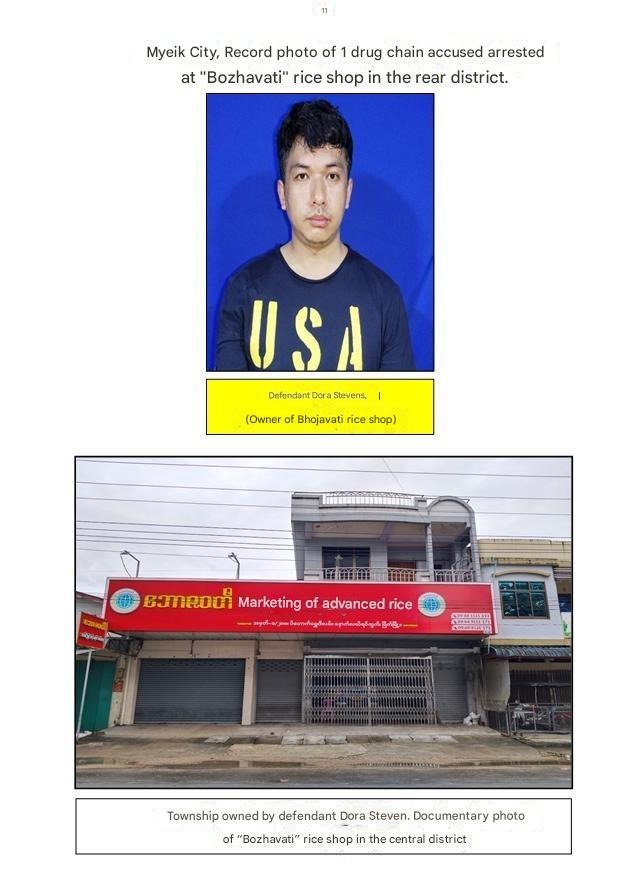
Among those detained were AA member Khin Htun, Pathein-based drug custodian La Min Khant, logistics supervisors, cargo-ship employees, and arms handlers. Firearms recovered during the searches, including a U.S.-made M4 rifle, an A-1 rifle, and various pistols give us idea how deeply intertwined the drug pipeline is with terrorist AA’s armed operations.
AA’s Expanding Role: From Producer to Regional Drug Courier Cartel
The latest investigative materials reveal that the seized consignment originated from long-entrenched narcotics hubs in Shan State. But what is most alarming is the transformation of the Arakan Army’s business model. AA is no longer merely involved in producing synthetic drugs, it now functions as a full-scale courier and logistics provider for multiple narcotics syndicates, transporting everything from high-purity methamphetamine to raw opium in exchange for hefty commissions. Leveraging its growing control over strategic coastal zones along the Bay of Bengal, AA has positioned itself as the preferred carrier for traffickers seeking discreet land-to-sea transition routes.
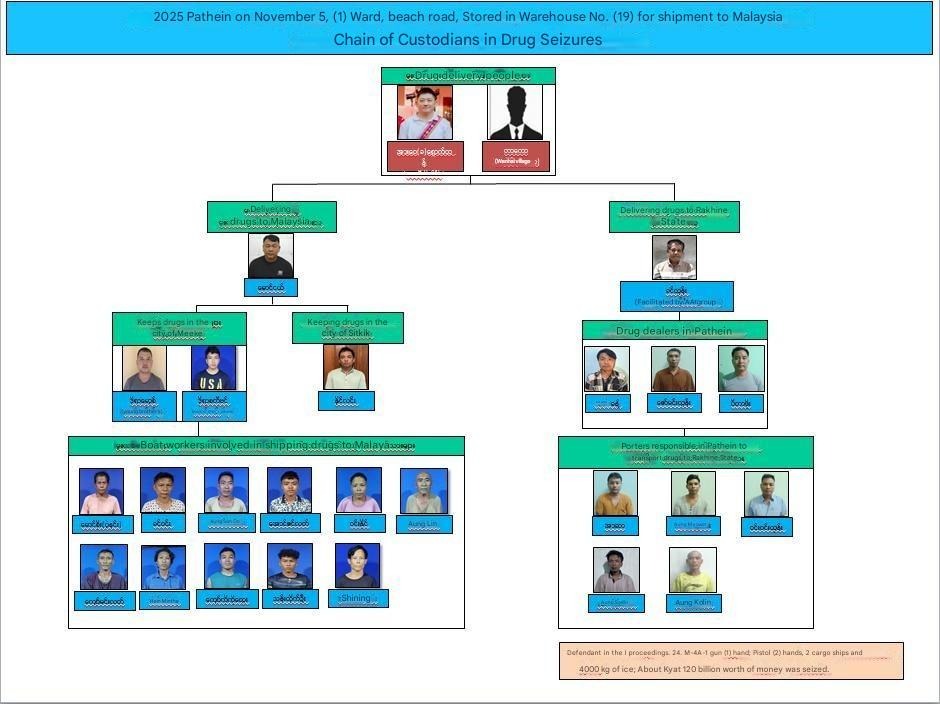
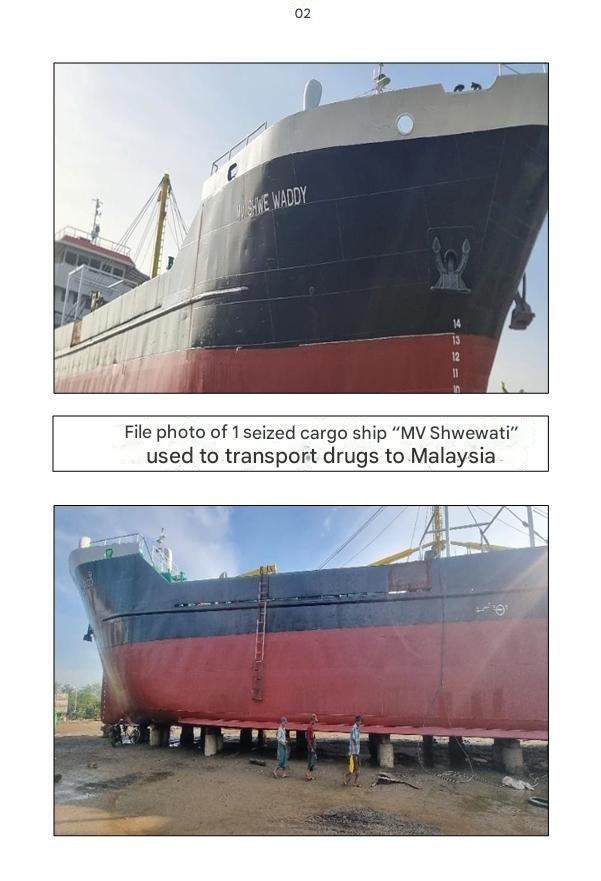
Key cartel controllers such as A Wai (Xiao Thang/Than Maung) and Takaw from Wan Hai oversaw the movement of meth shipments through Kyethi and Loilyn, after which the consignments were handed over to AA’s relay network. From there, the drugs were funneled toward the Ayeyarwady coastal belt, including Pathein using modified oil tankers fitted with concealed compartments, disguised as legitimate commercial transport. This shift marks AA’s evolution into a regional narco-logistics empire, deeply embedded in both inland trafficking corridors and maritime export channels.
From the coastal hubs, the ICE consignments were divided into two major routes:
(a) Toward Malaysia, Indonesia, and Singapore (with only the highest-purity drugs entering Singapore), managed by trafficker Maung Nge and his associates;
(b) Toward Arakan State;used as a secondary staging point for onward international trafficking, handled directly by AA’s drug operative Khin Htun.
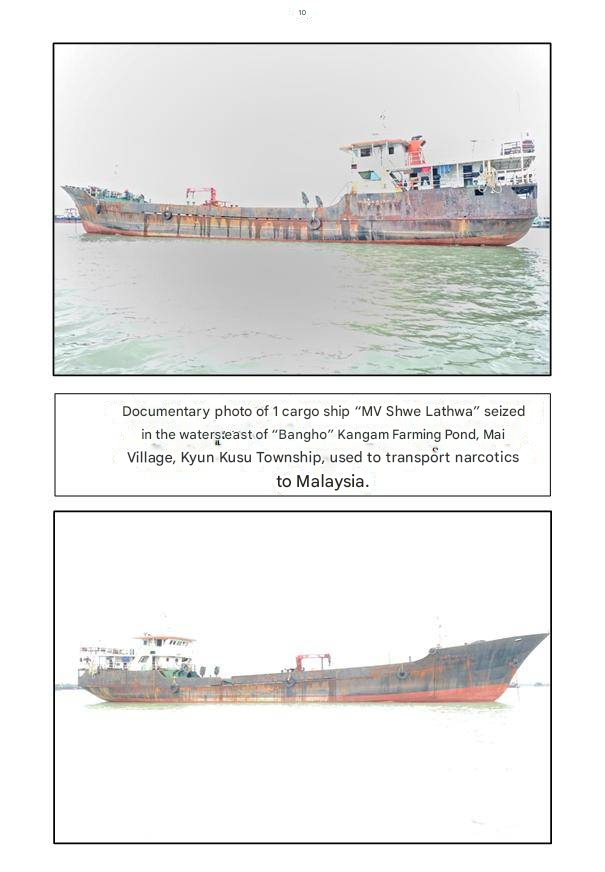
These findings expose a cartel-grade logistics chain spanning inland transport nodes, maritime cargo corridors, and international distribution lines—proving that AA’s narcotics operations are not ad-hoc but deliberately and professionally structured.
Narco-Militancy and the Threat to Regional Stability
The implications of this discovery extend far beyond domestic criminality. AA’s drug empire now poses a strategic threat to Southeast Asian stability, with ripple effects reaching South Asia, the Bay of Bengal, and global narcotics enforcement systems.
The synthesis, trafficking, and monetization of methamphetamine have directly strengthened AA’s military capabilities. Revenues from drugs are converted into weapons, ammunition, surveillance equipment, and paramilitary expansion. More dangerously, the profits fuel AA’s ongoing campaigns of brutal repression, forced displacement, genocide and demographic engineering against Rohingya communities in Arakan.
But the threat is not limited to Myanmar.
AA’s expanding operations:
(a) Destabilize maritime security in the Bay of Bengal
(b) Empower cross-border trafficking syndicates in Thailand, Malaysia, and the Andaman corridor
(c) Increase meth availability in Asian cities, contributing to addiction, violence, and social disorder.
A Call for Scrutiny and Accountability:
For years, Rohingya communities have warned international observers that the Arakan Army is not the “liberation movement” it claims to be. Its increasing reliance on narcotics revenue, its violent persecution of minorities, and its covert economic empire now stand exposed through concrete evidence.
The 57 million USD drug haul is not an isolated incident, it is a window into a far deeper criminal architecture.
If the region and the world continue to overlook AA’s transformation into a narco-militia, both Southeast Asia and the broader international community will pay a heavy price. The time for neutral silence is over; AA’s drug-fueled terror economy is now a global security problem.
The international community, especially ASEAN, the OIC, UNODC, and partners engaged in Indo-Pacific security, must urgently consider targeted sanctions against the Arakan Army’s financial networks, Officials, logistics intermediaries, and front entities. Allowing AA to continue producing, transporting, and monetizing narcotics with impunity will not only deepen the Rohingya crisis but also accelerate regional criminalization, undermine maritime security, and embolden transnational syndicates across Asia. Strategic pressure, coordinated sanctions, and financial disruption are now essential tools to contain this narco-terrorist expansion before it reshapes the entire Bay of Bengal security architecture.