
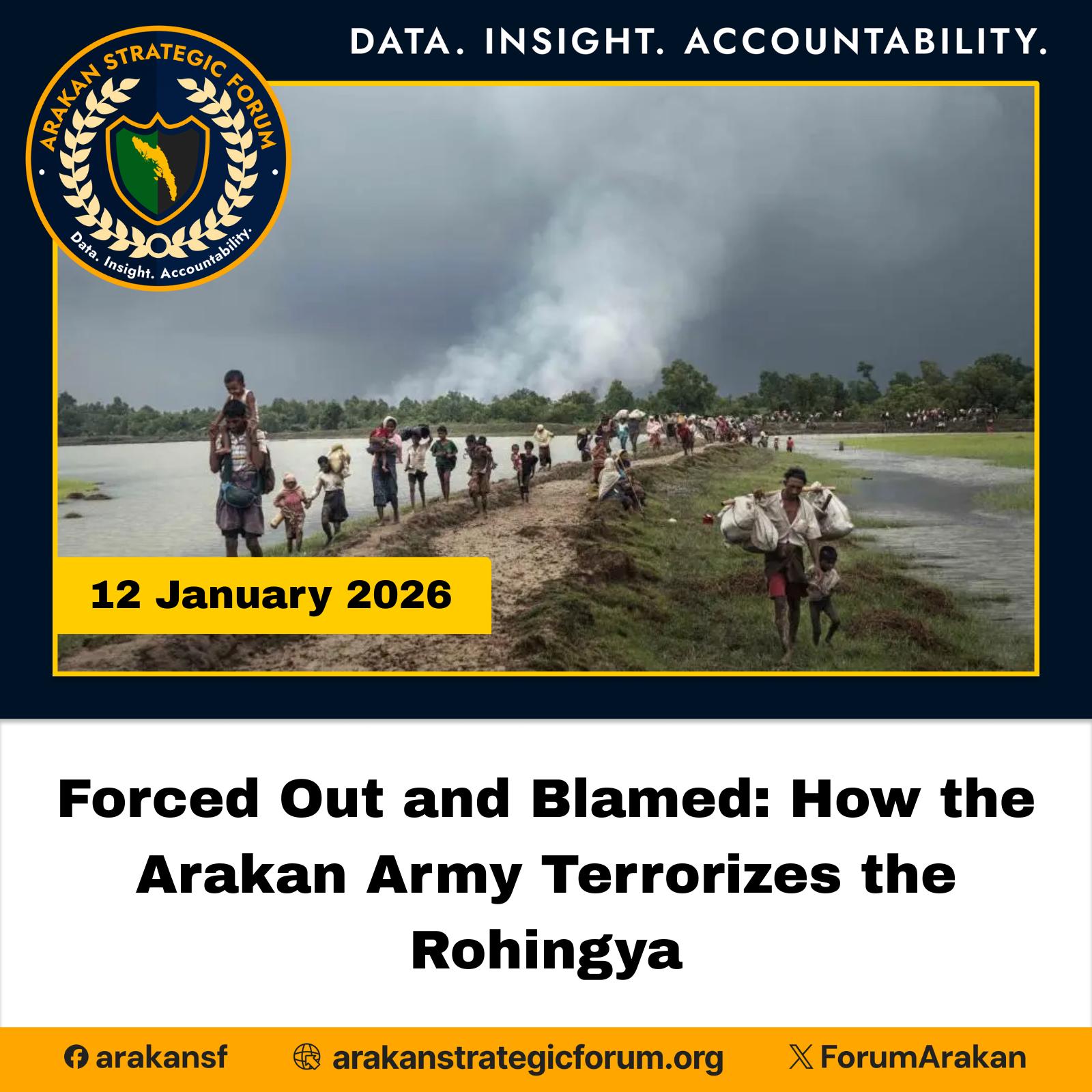
Across northern Maungdaw and Buthidaung, the Arakan Army (AA) has adopted a brutal, systematic strategy: persecute Rohingya communities, then falsely blame them for fleeing. This dual approach coercion followed by criminalization now defines AA’s operational doctrine.
On 29 November in Kyauk Chaung, AA fighters detained 40 Rohingya men, torturing them for three days and disappearing nine, including respected elders. Branded as “security checks,” these detentions implied Rohingya links to other armed actors.
Survivors bore severe injuries; some could not walk or speak. Yet AA propaganda depicted them as “suspects,” turning victims into scapegoats for their own displacement.
In northern Maungdaw, AA commanders forced 50 laborers from each village daily even during rice harvest. Villagers who refused were told to “leave the country.” The displacement they caused was later reframed as “voluntary migration” or “illegal border crossing,” criminalizing those coerced into fleeing.
In Buthidaung, over 1,000 Rohingya men have been forced into road-clearing, trench-digging, portering ammunition, and other military logistics. Another 78, including women and children, endured three months of unpaid forced labor.
The AA simultaneously accused these communities of “refusing cooperation” and “destabilizing the area,” using victim-blaming to justify harsher crackdowns.
Daily life is similarly militarized. In Zone Six villages Mingalar Gyi, Kyauk Lyu Khar, Tharye Auk, Hla Baw Zaar AA fighters seize goods without payment, assault civilians, and threaten eviction. Fear and immobility caused by this violence are reframed as “lack of discipline,” legitimizing further control.