
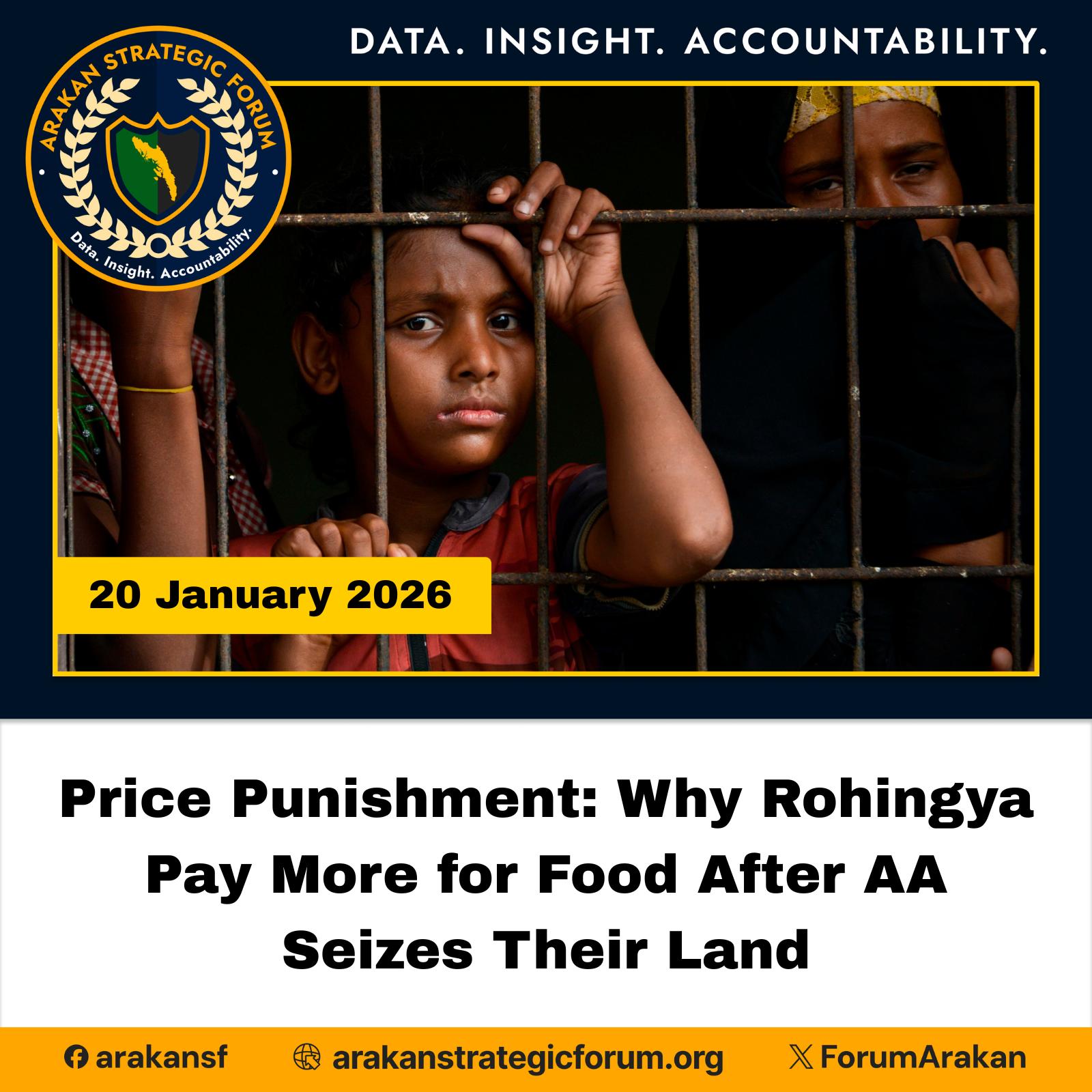
Across northern Arakan State, the Arakan Army has turned food into a weapon against Rohingya civilians. After seizing farmland in Maungdaw, Buthidaung, and Rathedaung, it destroyed local food production and engineered scarcity. Communities once self-sufficient in rice, vegetables, and fish are now forced to buy from AA controlled markets at inflated prices. Hunger here is deliberate and monetized.
Reports from 2024–2025 show a clear pattern: once Rohingya lose access to land and fisheries, staple prices surge in their areas while remaining stable elsewhere. Rice that cost 2,500–3,000 kyats per viss now sells for 4,500–6,000. Wages collapse under movement bans and forced labor.
The same armed group that seized farmland now controls transport routes and checkpoints, collecting fees at every stage of delivery. Rohingya are charged more simply for being Rohingya. Every road, gate, and market becomes a toll booth.
Selective access reinforces this price punishment. Non-Rohingya traders move freely, while Rohingya buyers face extortion, permits, and arbitrary delays that raise costs further. Discrimination is built into the market.
Families now spend over 70% of income on food. They cut meals, pull children from school, and sell what little remains. This is not market failure it is discriminatory economic design.
AA’s strategy is twofold: seize land to destroy self-sufficiency, then inflate prices to enforce dependency on AA-controlled supply chains. The group profits from the scarcity it created.
This is coercive extraction. By making food unaffordable after taking the land that produced it, the Arakan Army converts hunger into control. Rohingya are punished not for crimes but for existing on land the AA wants without its people.