
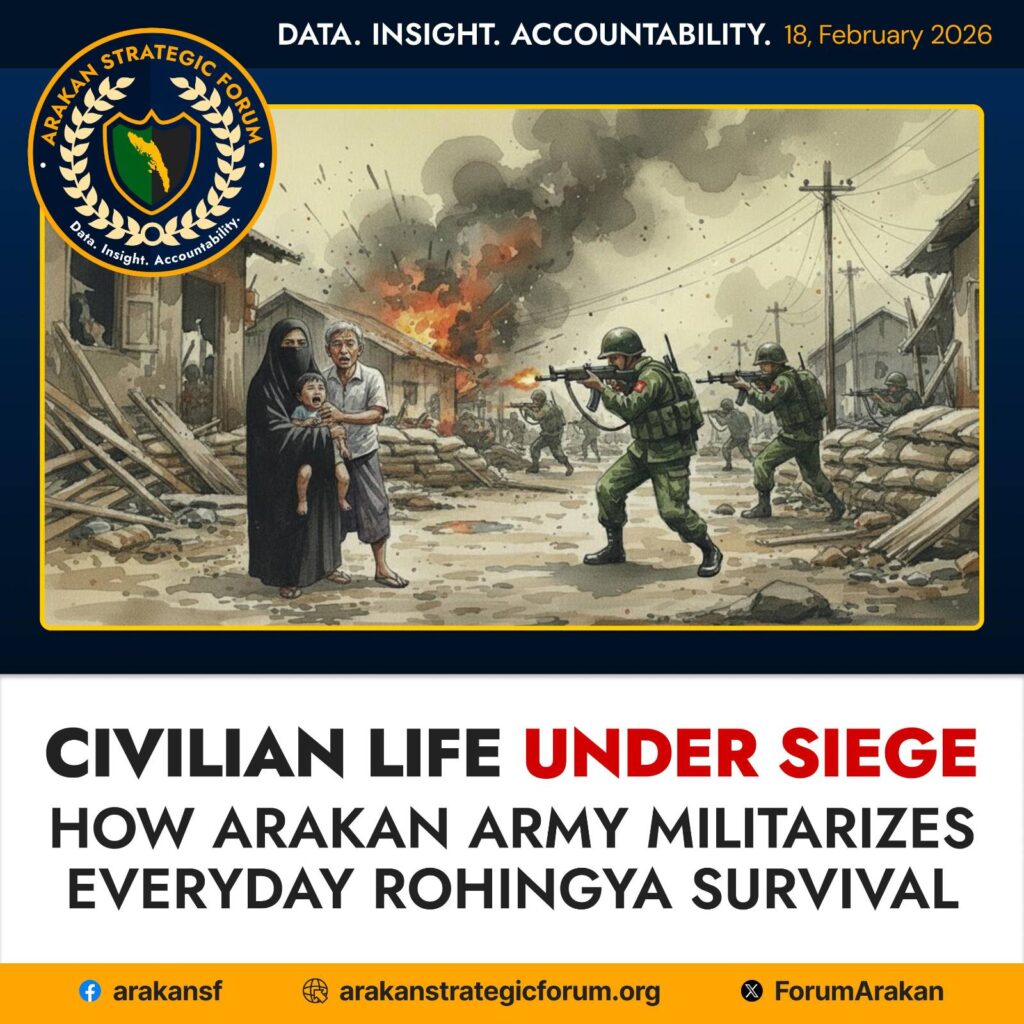
In northern Arakan, the Arakan Army has embedded military control into the daily survival of Rohingya Muslims. Farming, fishing, travel, and trade are regulated through a security framework that threats basic civilian activity as a controlled function.
Movement is tightly restricted. In townships such as Maungdaw and Buthidaung, Rohingya residents must obtain permits to travel between villages, access markets, or transport goods. Checkpoints enforce document inspections, and failure to produce the required papers often results in detention, fines, or physical punishment. These restrictions are not systematically imposed on neighboring Rakhine communities.
Livelihoods are also militarized. Fishing bans, farming quotas, and limits on crop transport are enforced under “security” justifications. In northern Maungdaw, commanders have reportedly imposed daily labor quotas. During harvest season, dozens of workers are forced to work such as road clearing, bunker construction, and supply transport. Refusal brings threats of expulsion.
The economic consequences are severe. Trade blockades and movement controls have left many Rohingya households facing acute food insecurity. With legal income pathways restricted, families are pushed toward debt or flight. Reports from August 2024 described civilians fleeing toward the Naf River amid intensified conditions, with accounts of drone attacks and civilian casualties along crossing routes.
By framing restrictions as “monitoring” and forced labor as “community duty,” the AA presents coercion as administration. Under this system, everyday survival becomes a security issue, and civilian life operates under continuous military oversight.