
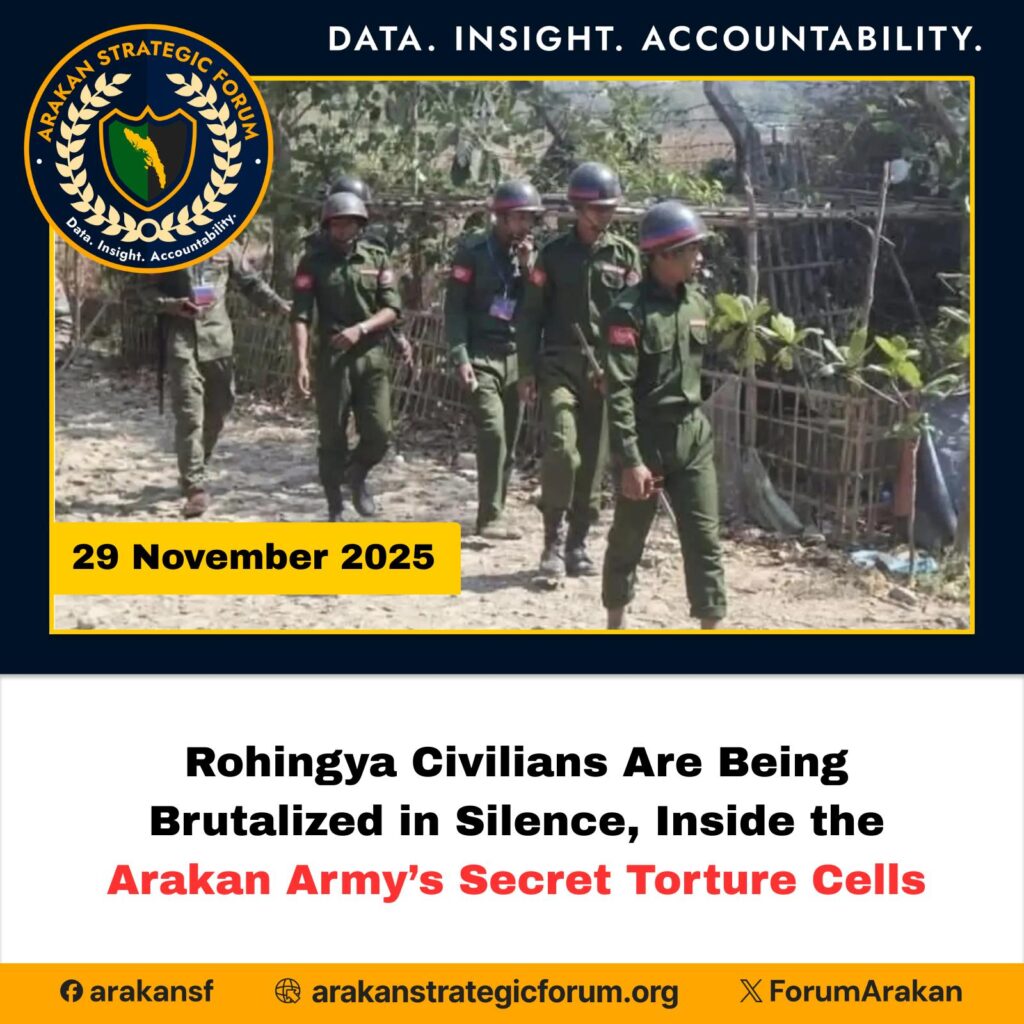
While the world debates “resistance narratives,” a darker reality unfolds inside Arakan: the Terrorist Arakan Army (AA) is operating a shadow network of torture cells, black-sites, and interrogation centers specifically targeting Rohingya civilians. These facilities, hidden inside abandoned schools, village monasteries, storage compounds, and makeshift bunkers, are now central to AA’s control strategy.
Survivor testimonies collected from Buthidaung, Maungdaw, Kyauktaw, Minbya, and Rathedaung reveal a pattern of systematic abuse, not isolated misconduct. Rohingya men and boys sometimes women are detained on suspicion of “collaboration,” “non-cooperation,” or simply refusing AA’s forced taxation and forced recruitment orders.
Inside these torture cells, Rohingya detainees report:
A. Hooded confinement, hands tied behind backs for hours
B. Beatings with bamboo rods, iron pipes, and rifle butts
C. Electric shocks to legs and back
D. Burning plastic dripped on skin
E. Forced kneeling on stones or salt-soaked ground
F. Sleep deprivation and starvation for days
G. Family members threatened to coerce confessions
H. Forced video statements praising AA and denouncing Rohingya identity
In several cases, AA interrogators demanded money or gold for release, turning torture centers into an extortion economy. Many detainees were forced to carry supplies, deliver weapons, or smuggle yaba across AA-controlled routes after “release,” effectively making torture a recruitment mechanism.
Human Rights Watch, independent field monitors, and new refugee arrivals consistently describe the same structures, same methods, same perpetrators, proving these are not rogue behavior but organized, sanctioned systems of repression.
For Rohingya communities, AA’s torture cells are not only instruments of fear they are tools of political engineering. By breaking civilian resistance, extracting intelligence, and forcing compliance, AA seeks to erase Rohingya presence from strategic zones while strengthening its narco-military authority.
This is the part of the Arakan conflict the world rarely sees:
interrogation rooms, not liberation; torture cells, not governance; fear, not freedom.
If regional actors and international stakeholders are serious about human rights, accountability must begin with these hidden chambers where Rohingya civilians are being brutalized under the silence of war.